
Culture
The Botafumeiro: History of Santiago Cathedral's Giant Incense Burner
Discover the history of the Botafumeiro, the giant incense burner of Santiago Cathedral, and why it has become one of the most famous traditions of the Camino de Santiago.
April 29, 2026 · 12 min read
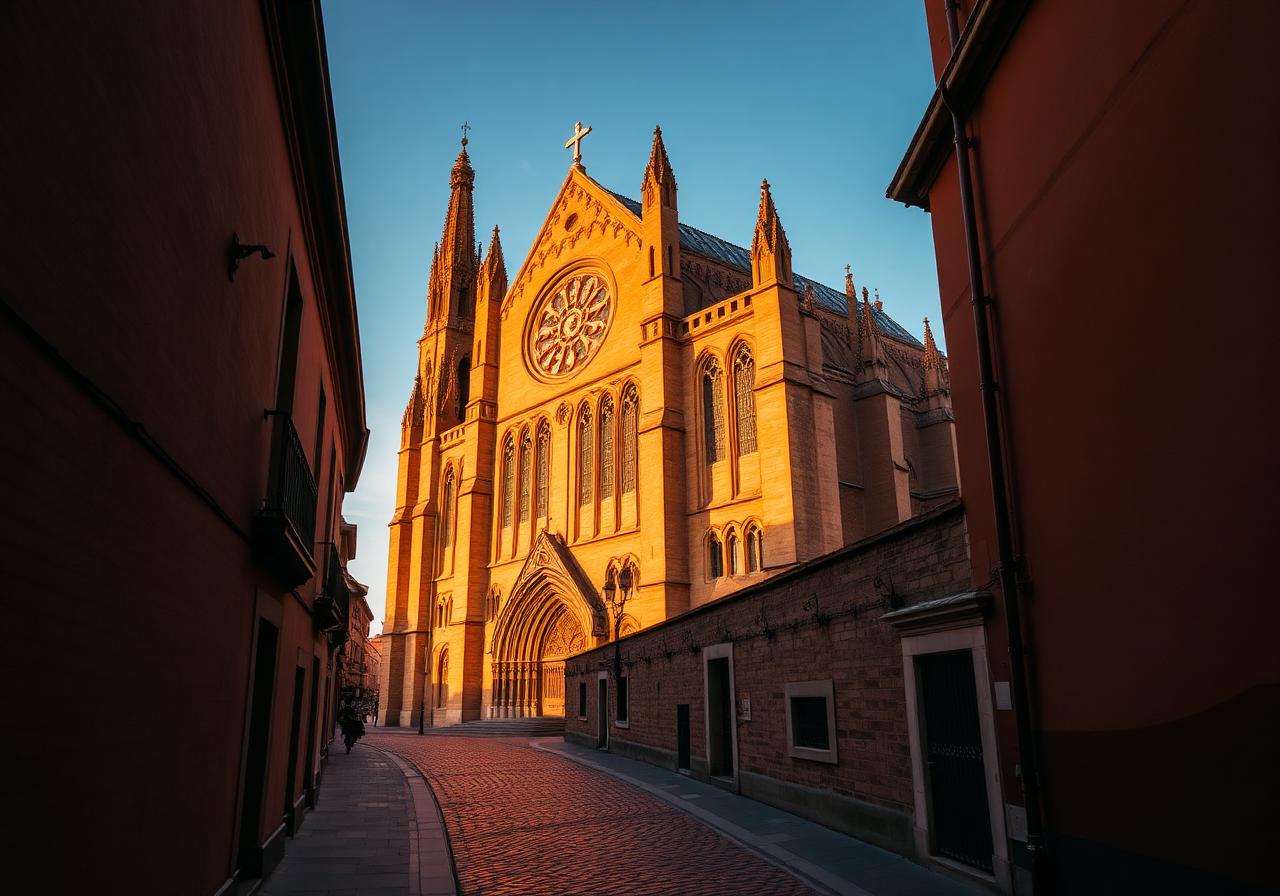
The Botafumeiro is one of the most unforgettable sights in Santiago de Compostela Cathedral. Suspended high inside the cathedral, this giant incense burner swings dramatically through the air, filling the sacred space with smoke, movement, and symbolism. For pilgrims who have just completed the Camino de Santiago, seeing the Botafumeiro can feel like a powerful final image of the journey.
It is beautiful, theatrical, ancient-feeling, and deeply tied to the atmosphere of Santiago. But what is the Botafumeiro, and why does it matter? Its history connects to cathedral liturgy, medieval pilgrimage, incense symbolism, popular stories about pilgrim smells, and the continuing tradition of arrival in Santiago. Today, it remains one of the most famous features of the Cathedral of Santiago de Compostela.
What is the Botafumeiro? The Botafumeiro is a large incense burner, or thurible, used in the Cathedral of Santiago de Compostela. Its name comes from Galician and can be translated roughly as 'smoke expeller' or 'smoke spreader.' Unlike ordinary incense burners used in church services, the Botafumeiro is enormous. It hangs from a pulley system and is swung through the cathedral by a team of attendants known as tiraboleiros. When it moves, it can reach impressive speed and height, creating one of the most dramatic rituals associated with the Camino.
Where is the Botafumeiro used? The Botafumeiro is used inside the Cathedral of Santiago de Compostela, especially during certain solemn liturgical celebrations. It swings through the transept of the cathedral, passing above the heads of worshippers and visitors. The sight is especially memorable because of the scale of the movement. For many pilgrims, watching the Botafumeiro after completing the Camino is one of the emotional highlights of arriving in Santiago. However, it does not swing at every Mass. Its use depends on the cathedral schedule, special feast days, and occasions when it has been arranged.
Incense in Christian tradition. To understand the Botafumeiro, it helps to understand the role of incense in Christian worship. Incense has been used in religious rituals for centuries. In Christian liturgy, it can symbolize prayer rising to heaven, purification, reverence, and the sacredness of the space. The smoke creates an atmosphere of mystery and devotion. It changes how a space feels, smells, and is experienced. The Botafumeiro is unusual because of its size and dramatic movement, but its basic purpose is rooted in the traditional use of incense in worship.
Why is the Botafumeiro so large? One of the most common explanations is that the Botafumeiro's size was connected to the large number of pilgrims arriving at the cathedral. Santiago Cathedral received pilgrims who had walked long distances, often in difficult conditions. Medieval pilgrims arrived tired, dirty, and sometimes ill after weeks or months on the road. A popular story says the Botafumeiro was used partly to mask the smell of pilgrims gathered inside the cathedral. There may be some practical truth to the idea that incense helped freshen the air. However, the main purpose of incense was liturgical and symbolic. The Botafumeiro's size reflects both the scale of the cathedral and the importance of the pilgrimage.
The Botafumeiro and medieval pilgrims. In the Middle Ages, pilgrims arrived in Santiago after long and difficult journeys. They had crossed mountains, rivers, forests, plains, and towns. Many had slept in crowded shelters, worn the same clothes for weeks, and endured injury or sickness. Entering the cathedral would have been overwhelming. The sight and smell of incense, the sound of prayer and chant, and the presence of the tomb of Saint James created a powerful religious experience. The Botafumeiro helped shape that atmosphere. For medieval pilgrims, it was not entertainment. It was part of sacred worship.
The meaning of the swinging incense. The movement of the Botafumeiro is part of its power. As it swings through the cathedral, smoke spreads across the space. The motion draws the eye upward, toward the vaults and arches. It creates a sense of lift, rhythm, and awe. Symbolically, the rising smoke can represent prayers rising to heaven. For pilgrims, this can feel especially meaningful after a long Camino. The physical effort of walking meets the spiritual image of ascent. The ritual turns the cathedral into a moving, breathing space.
Who are the tiraboleiros? The Botafumeiro is operated by a group of attendants called tiraboleiros. They pull ropes in a coordinated rhythm to set the giant incense burner in motion. The process requires timing, strength, experience, and care. The swinging of the Botafumeiro is not automatic. It is a human ritual, performed by people who understand the movement and weight of the object. Watching the tiraboleiros work is part of the experience. Their coordination turns the Botafumeiro from a hanging object into a dramatic act of worship.
How fast does the Botafumeiro swing? The Botafumeiro can swing at high speed through the cathedral. Descriptions often note that it can reach speeds of around 60 kilometers per hour, though exact figures may vary depending on the swing. Its motion is dramatic because it travels in a wide arc across the transept. It rises high toward the ceiling before sweeping back down. For visitors seeing it for the first time, the scale can be surprising. It feels both graceful and powerful.
Is the Botafumeiro used at every Pilgrim's Mass? No, the Botafumeiro is not used at every Pilgrim's Mass. Many pilgrims arrive hoping to see it, but its use is reserved for certain occasions, feast days, special services, or when arranged through an offering. This means you should not assume it will swing during the Mass you attend. If seeing the Botafumeiro is important to you, check the official cathedral schedule or ask at the Pilgrim's Office when you arrive in Santiago. Even when it does not swing, the Pilgrim's Mass can still be meaningful.
Feast days and special occasions. The Botafumeiro is traditionally used on major religious feast days and special occasions. These may include important days connected to Saint James, Christmas, Easter, and other solemn celebrations. Because schedules can change, pilgrims should confirm current information through the cathedral's official sources. The uncertainty can be disappointing for some visitors, but it also preserves the Botafumeiro as something special rather than routine. Its rarity adds to its impact.
The Botafumeiro as a Camino symbol. Although the Botafumeiro belongs to the cathedral's liturgical life, it has also become a symbol of the Camino itself. Images and videos of it are shared widely by pilgrims. It appears in Camino documentaries, travel guides, social media posts, and personal stories. For many people, it represents the emotional climax of reaching Santiago. The Camino is full of small symbols: shells, arrows, stamps, walking sticks, boots, and backpacks. The Botafumeiro is one of its grand symbols.
A moment of arrival. For pilgrims, seeing the Botafumeiro can feel like a moment of arrival. After walking for so long, the cathedral is already overwhelming. Then, if the Botafumeiro begins to swing, the moment becomes even more powerful. The smoke, movement, sound, and scale can bring the journey's emotions to the surface. Some pilgrims cry. Some stand in silence. Others simply watch in awe. It is one of those Camino moments that is hard to explain until you experience it.
History and restoration. The Botafumeiro has a long history, though the exact object used today is not the original medieval incense burner. Over the centuries, it has been replaced, restored, repaired, and maintained. Like the cathedral itself, the Botafumeiro is part of a living tradition that has changed over time. Its continued use requires care because of its size, weight, and movement. Preserving the Botafumeiro means preserving both an object and a ritual.
Has the Botafumeiro ever had accidents? There are stories of accidents involving the Botafumeiro in the past. Because it is large, heavy, and swings at high speed, safety is important. Historical accounts mention incidents where it reportedly broke loose or caused damage, though such events are rare. Today, the operation is carefully managed. The possibility of danger may be part of why the ritual feels so dramatic, but it is performed by trained attendants using established procedures.
Watching the Botafumeiro respectfully. Because the Botafumeiro is part of a religious service, visitors should watch respectfully. It is understandable to want photos or videos, but the cathedral is an active place of worship. Pilgrims and visitors should follow rules, avoid blocking others, stay quiet during prayer, and remember that the ritual is not just a tourist performance. Respecting the moment helps preserve its meaning. For many people around you, it may be deeply spiritual.
Is it worth seeing? Yes, if you have the chance, seeing the Botafumeiro is worth it. It is one of the most unique traditions in Santiago Cathedral and a powerful visual experience. For Camino pilgrims, it can become one of the lasting memories of arrival. But it is also important not to make your entire Santiago experience depend on it. The Camino is not incomplete if you do not see the Botafumeiro. The real arrival is the journey you carried into the city.
Why the Botafumeiro still matters. The Botafumeiro still matters because it connects modern pilgrims to the ancient atmosphere of Santiago. It uses smoke, movement, ritual, and sacred space to create a moment that feels larger than ordinary life. It reminds pilgrims that the Camino is not only physical. It is symbolic, emotional, historical, and spiritual. The Botafumeiro belongs to a cathedral that has received pilgrims for more than a thousand years. When it swings, that history feels alive.
Final thoughts. The Botafumeiro is one of the most famous and meaningful traditions of Santiago Cathedral. As a giant incense burner, it is rooted in Christian liturgy, but it has also become a powerful symbol of the Camino de Santiago. Its smoke, movement, and scale create a moment of awe for pilgrims who have walked toward Santiago from near and far. It may have practical associations with medieval pilgrim crowds, but its deepest meaning is spiritual. It represents prayer, arrival, purification, gratitude, and the mystery of the journey. For many pilgrims, seeing the Botafumeiro swing is not just watching a ritual. It is feeling the Camino rise into the air. Buen Camino.
Keep exploring
Next stops & related posts
Towns, stages, and stories connected to this article — your jumping-off points to plan the next stretch of the Camino.
Pilgrim guides
- Roncesvalles monastery & albergue
- Samos monastery lodging
- Foncebadón mountain albergues
- O Cebreiro pilgrim shelters
- All lodging articles
- Camino Primitivo (mountain terrain)
- Camino del Norte (coastal weather)
- Foncebadón (high pass)
- O Cebreiro (Galician mountains)
- Santiago de Compostela cathedral
- León cathedral city
- Burgos cathedral city
- Samos monastery
- Roncesvalles monastery
- O Cebreiro pre-Romanesque church
- All history articles
Towns to visit
Suggested stages
Camino Francés · Stage 33
O Pedrouzo → Santiago de Compostela
20 km · 240 m · Moderate
Camino Portugués · Stage 11
Padrón → Santiago de Compostela
25 km · 280 m · Moderate
Camino Primitivo · Stage 14
O Pedrouzo → Santiago de Compostela
20 km · 280 m · Moderate
Camino Inglés · Stage 6
Sigüeiro → Santiago de Compostela
16 km · 200 m · Easy
Related routes
Related posts
Culture
Camino yellow arrows meaning
Discover the meaning of the yellow arrows on the Camino de Santiago, where they came from, and why they have become one of the most beloved symbols of The Way.
Culture
Why Did Pilgrims Walk to Finisterre?
Discover why pilgrims walked from Santiago to Finisterre, the "end of the world," and how this Atlantic extension became one of the most meaningful parts of the Camino.
Culture
The Cathedral of Santiago de Compostela: History and Meaning
Discover the history and meaning of the Cathedral of Santiago de Compostela, the spiritual heart of the Camino and the traditional resting place of Saint James.
More posts like this
Articles that share keywords, routes, or towns with this one.
Culture
The Meaning of the Yellow Arrows on the Camino de Santiago
- 4 shared routes
- 1 shared town
Culture
Why Did Pilgrims Walk to Finisterre?
- 4 shared routes
- 1 shared town
Culture
The Cathedral of Santiago de Compostela: History and Meaning
- 4 shared routes
- 1 shared town
Culture
How the Camino de Santiago Declined and Was Revived
- 4 shared routes
- 1 shared town
Read next
Culture
The Meaning of the Yellow Arrows on the Camino de Santiago
Discover the meaning of the yellow arrows on the Camino de Santiago, where they came from, and why they have become one of the most beloved symbols of The Way.
9 min read
Culture
Why Did Pilgrims Walk to Finisterre?
Discover why pilgrims walked from Santiago to Finisterre, the "end of the world," and how this Atlantic extension became one of the most meaningful parts of the Camino.
11 min read
Culture
The Cathedral of Santiago de Compostela: History and Meaning
Discover the history and meaning of the Cathedral of Santiago de Compostela, the spiritual heart of the Camino and the traditional resting place of Saint James.
13 min read
Culture
How the Camino de Santiago Declined and Was Revived
Discover how the Camino de Santiago declined after the Middle Ages and how it was revived into one of the world's most famous pilgrimage routes today.
13 min read
Culture
The Camino de Santiago in Modern Times
Explore the Camino de Santiago in modern times and how an ancient pilgrimage became a global journey of faith, adventure, healing, culture, and self-discovery.
13 min read
Culture
Why the Camino de Santiago Still Matters Today
Discover why the Camino de Santiago still matters today and why this ancient pilgrimage continues to attract modern walkers seeking meaning, healing, adventure, and connection.
13 min read