
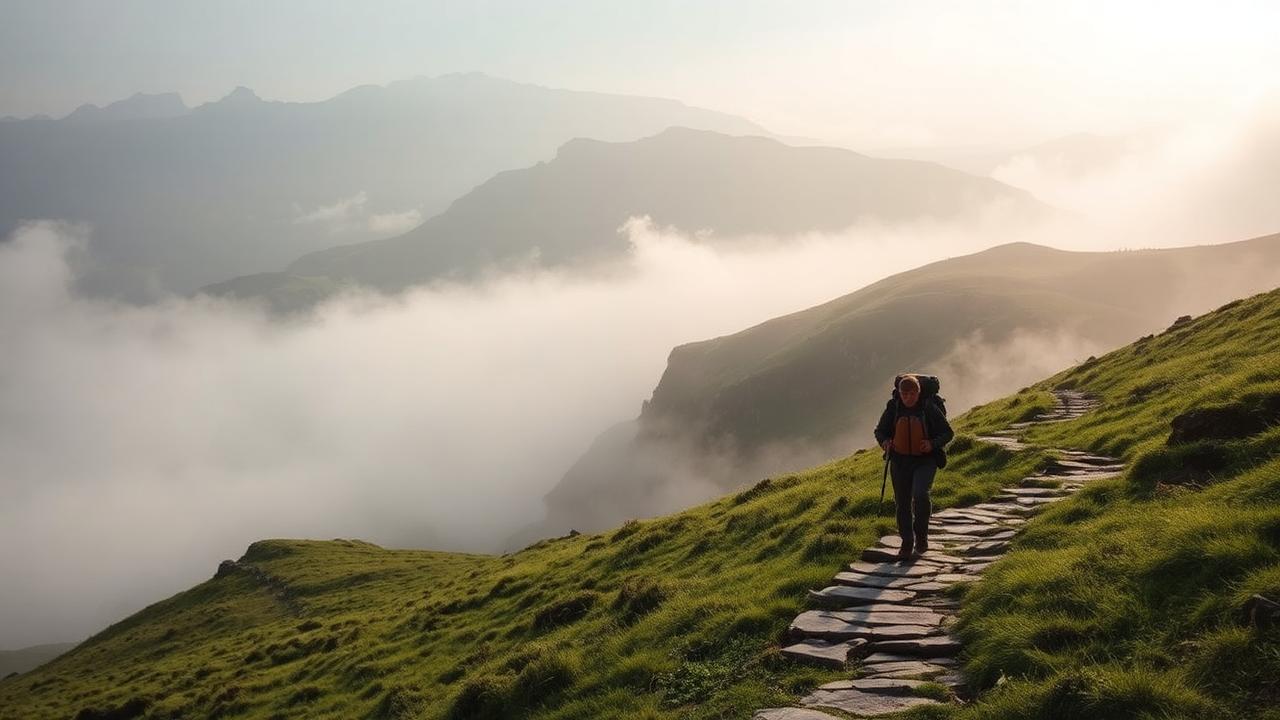
Camino Primitivo
The Original Way — King Alfonso II's mountain path from Oviedo to Santiago.
Distance
320 km
Duration
12–14 days
Difficulty
Challenging
Best season
May – September
Highlights
- 14 featured stages
- Oviedo, Asturias → Santiago de Compostela, Spain
- San Salvador cathedral departure
- Pre-Romanesque churches of Monte Naranco
- Descent into the Nora valley to Grado
About this route
The oldest of all the Caminos. First walked by King Alfonso II of Asturias in the 9th century, the Primitivo climbs from the pre-Romanesque churches of Oviedo over the Cantabrian mountains and into Galicia, joining the Francés at Melide for the final push into Santiago.
Stages
A featured selection of stages on the Camino Primitivo. Click any stage for distance, albergues, and where to eat.
Your progress on the Camino Primitivo
14 stages · 323 km · ~84 h 57 min total walking
0 km / 0 min done · 323 km / 84 h 57 min to go
- 1↑ 600 m~6 h 33 minModerate
- 2↑ 750 m~6 h 8 minChallenging
- 3↑ 870 m~5 h 54 minChallenging
- 4↑ 700 m~7 h 23 minChallenging
- 5↑ 920 m~5 h 19 minChallenging
- 6↑ 480 m~5 h 15 minChallenging
- 7↑ 880 m~7 h 15 minChallenging
- 8↑ 670 m~6 h 27 minModerate
- 9↑ 540 m~7 h 34 minChallenging
- 10↑ 320 m~6 h 32 minModerate
- 11↑ 380 m~7 h 31 minChallenging
- 12↑ 230 m~3 h 30 minEasy
- 13↑ 280 m~4 h 41 minModerate
- 14↑ 280 m~4 h 55 minModerate
Walking times assume a steady ~4.5 km/h pace plus 10 min per 100 m of ascent. They cover moving time only — add breaks, photo stops and coffee.
- 1
Oviedo → Grado
25 km • 600 m gain • Moderate
San Salvador cathedral departure • Pre-Romanesque churches of Monte Naranco • Descent into the Nora valley to Grado
- 2
Grado → Salas
22 km • 750 m gain • Challenging
Climb to Alto del Fresno • Cornellana monastery of San Salvador • Salas' Valdés-Salas tower
- 3
Salas → Tineo
20 km • 870 m gain • Challenging
Long climb through chestnut woods • La Espina ridge • Tineo's hilltop views over western Asturias
- 4
Tineo → Pola de Allande
28 km • 700 m gain • Challenging
Monastery of Obona (12th c.) • Quiet ridges of inland Asturias • Arrival at the foot of the Puerto del Palo
- 5
Pola de Allande → Berducedo
17 km • 920 m gain • Challenging
Steep ascent of the Puerto del Palo (1,146 m) • High moorland with sweeping mountain views • Quiet hamlet of Berducedo
- 6
Berducedo → Grandas de Salime
20 km • 480 m gain • Challenging
Long descent to the Salime reservoir • Climb back up to Grandas • Ethnographic museum of Pepe el Ferreiro
- 7
Grandas de Salime → A Fonsagrada
26 km • 880 m gain • Challenging
Crossing into Galicia at Alto del Acebo • Hospital de Montouto pilgrim ruins • A Fonsagrada — 'the sacred fountain'
- 8
A Fonsagrada → O Cádavo (Baleira)
24 km • 670 m gain • Moderate
Montouto highlands • Padrón pre-Romanesque chapel ruins • Battle of Cádavo memorial
- 9
O Cádavo (Baleira) → Lugo
30 km • 540 m gain • Challenging
Castroverde's medieval tower • Long descent through hórreo country • Arrival at Lugo's intact Roman walls
- 10
Lugo → Ferreira (San Romao da Retorta)
27 km • 320 m gain • Moderate
Walk the Roman walls of Lugo before leaving • Río Miño bridge • Quiet rural Galicia through Bóveda
- 11
Ferreira (San Romao da Retorta) → Melide
31 km • 380 m gain • Challenging
Leboreiro pilgrim chapel • Joining the Camino Francés at Melide • Pulperías of Melide — Camino's octopus capital
- 12
Melide → Arzúa
14 km • 230 m gain • Easy
Eucalyptus and oak woods • Boente and Ribadiso river crossing • Galician cheese country at Arzúa
- 13
Arzúa → O Pedrouzo
19 km • 280 m gain • Moderate
Quiet eucalyptus stretches • Santa Irene chapel • Last night before Santiago
- 14
O Pedrouzo → Santiago de Compostela
20 km • 280 m gain • Moderate
Lavacolla — traditional pilgrim wash • Monte do Gozo first cathedral view • Arrival at Praza do Obradoiro for the noon pilgrim mass
Towns on this route
Cities and villages worth a longer stop along the Camino Primitivo.
Asturias
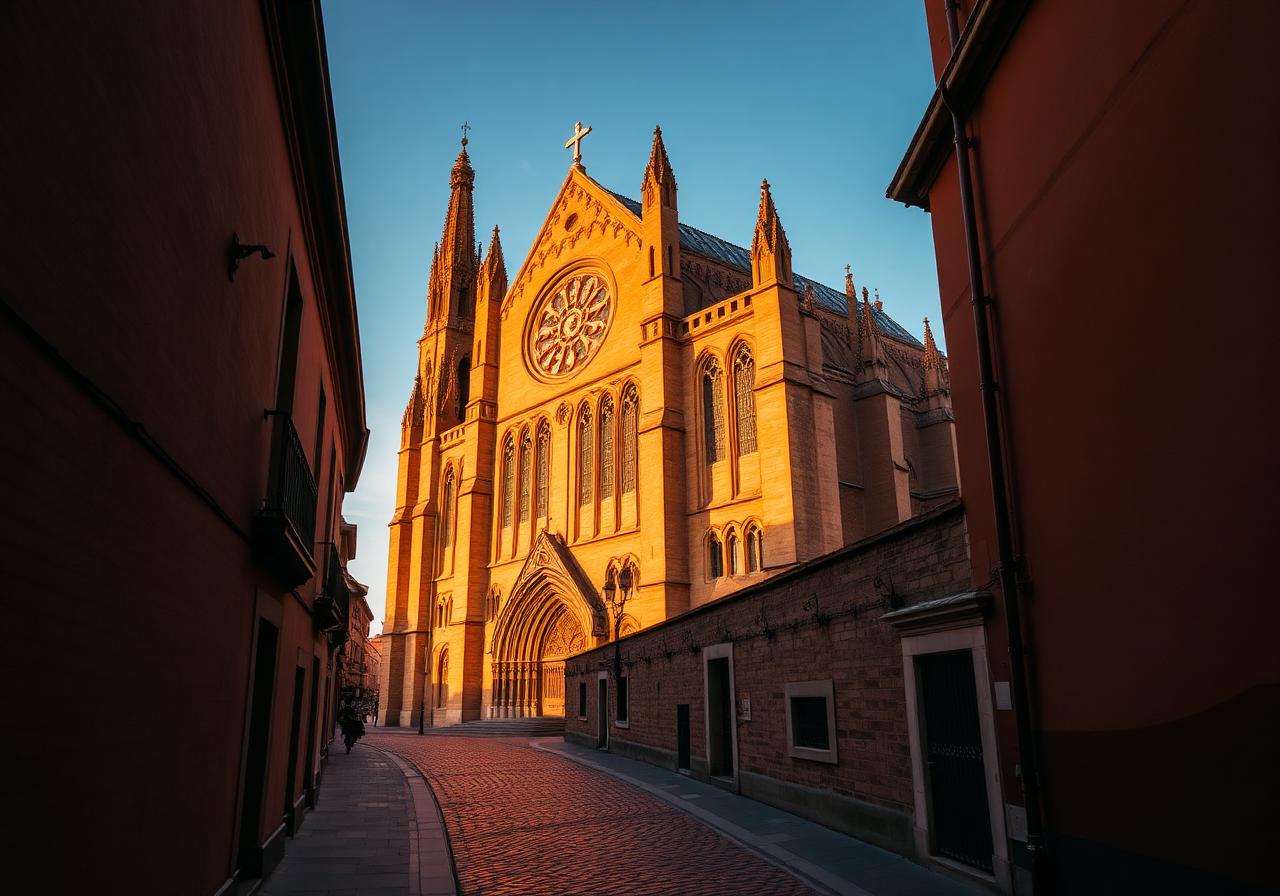
Oviedo
The royal capital of Asturias and birthplace of the Camino — where King Alfonso II began the first pilgrimage.
Asturias
Grado
A market town in the Nora valley and the traditional first night out of Oviedo.
Asturias
Salas
A small Asturian town clustered around the Renaissance tower-palace of the Valdés-Salas family.
Asturias
Tineo
A hilltop town with sweeping views — and the home of the chosco sausage.
Asturias
Pola de Allande
The last village before the Puerto del Palo — a quiet base under the high mountains.
Asturias
Berducedo
A tiny mountain hamlet at the top of the Puerto del Palo — Primitivo legend.
Asturias
Grandas de Salime
Home of Pepe el Ferreiro's beloved ethnographic museum and the last stop before Galicia.
Lugo, Galicia
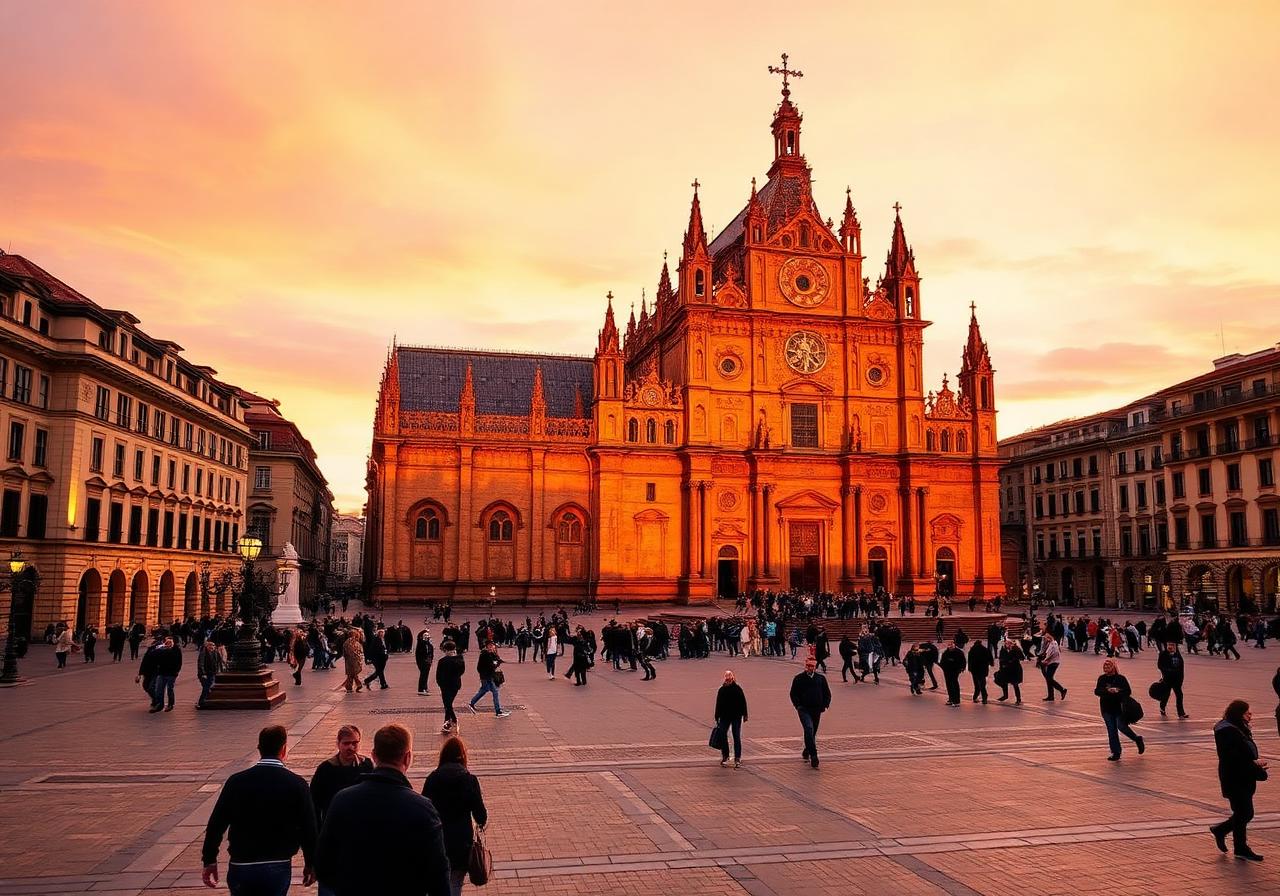
A Fonsagrada
A high Galician town named for its 'sacred fountain' — the first stop after crossing into Galicia.
Lugo, Galicia
O Cádavo (Baleira)
A quiet stage-end in the Galician highlands, on the descent toward Lugo.
Galicia
Lugo
The only city in the world ringed by a complete Roman wall — a UNESCO masterpiece you can walk on top of.
A Coruña, Galicia
Melide
The Camino's pulpo capital — where the Francés meets the Camino Primitivo.
A Coruña, Galicia
Arzúa
Where the Camino Norte joins the Francés — and the home of Galicia's most famous cheese.
A Coruña, Galicia
O Pedrouzo (Arca)
A linear eucalyptus-shaded town that serves as the traditional last night before Santiago.
Galicia
Santiago de Compostela
The journey's end — and for many pilgrims, a new beginning.
Interactive map
A clickable map of stages, towns, and albergues is coming soon — built on Leaflet and OpenStreetMap so it stays free and fast.
Related reading
All articles about the Camino Primitivo
Every post on Camino Compass that mentions this route, its towns, or its stages — 10 in total.
Culture
The History of the Camino Primitivo
Discover the history of the Camino Primitivo, the Original Way to Santiago de Compostela, from King Alfonso II's early pilgrimage to its modern revival.
12 min read
Culture
Who Was Saint James and Why Is He Connected to Santiago?
Learn who Saint James was, why he is connected to Santiago de Compostela, and how his legend became the foundation of the Camino de Santiago pilgrimage.
12 min read
Culture
The Meaning of the Yellow Arrows on the Camino de Santiago
Discover the meaning of the yellow arrows on the Camino de Santiago, where they came from, and why they have become one of the most beloved symbols of The Way.
9 min read
Culture
The History of the Camino Inglés
Discover the history of the Camino Inglés, the English Way to Santiago de Compostela, used by medieval pilgrims arriving by sea from England, Ireland, and northern Europe.
12 min read
Culture
Why Did Pilgrims Walk to Finisterre?
Discover why pilgrims walked from Santiago to Finisterre, the "end of the world," and how this Atlantic extension became one of the most meaningful parts of the Camino.
11 min read
Culture
The Cathedral of Santiago de Compostela: History and Meaning
Discover the history and meaning of the Cathedral of Santiago de Compostela, the spiritual heart of the Camino and the traditional resting place of Saint James.
13 min read
Culture
The Botafumeiro: History of Santiago Cathedral's Giant Incense Burner
Discover the history of the Botafumeiro, the giant incense burner of Santiago Cathedral, and why it has become one of the most famous traditions of the Camino de Santiago.
12 min read
Culture
How the Camino de Santiago Declined and Was Revived
Discover how the Camino de Santiago declined after the Middle Ages and how it was revived into one of the world's most famous pilgrimage routes today.
13 min read
Culture
The Camino de Santiago in Modern Times
Explore the Camino de Santiago in modern times and how an ancient pilgrimage became a global journey of faith, adventure, healing, culture, and self-discovery.
13 min read
Culture
Why the Camino de Santiago Still Matters Today
Discover why the Camino de Santiago still matters today and why this ancient pilgrimage continues to attract modern walkers seeking meaning, healing, adventure, and connection.
13 min read