
Culture
The Camino During the Reconquista
Explore the history of the Camino de Santiago during the Reconquista and how pilgrimage, politics, faith, and medieval Spain shaped the Way of Saint James.
April 29, 2026 · 13 min read
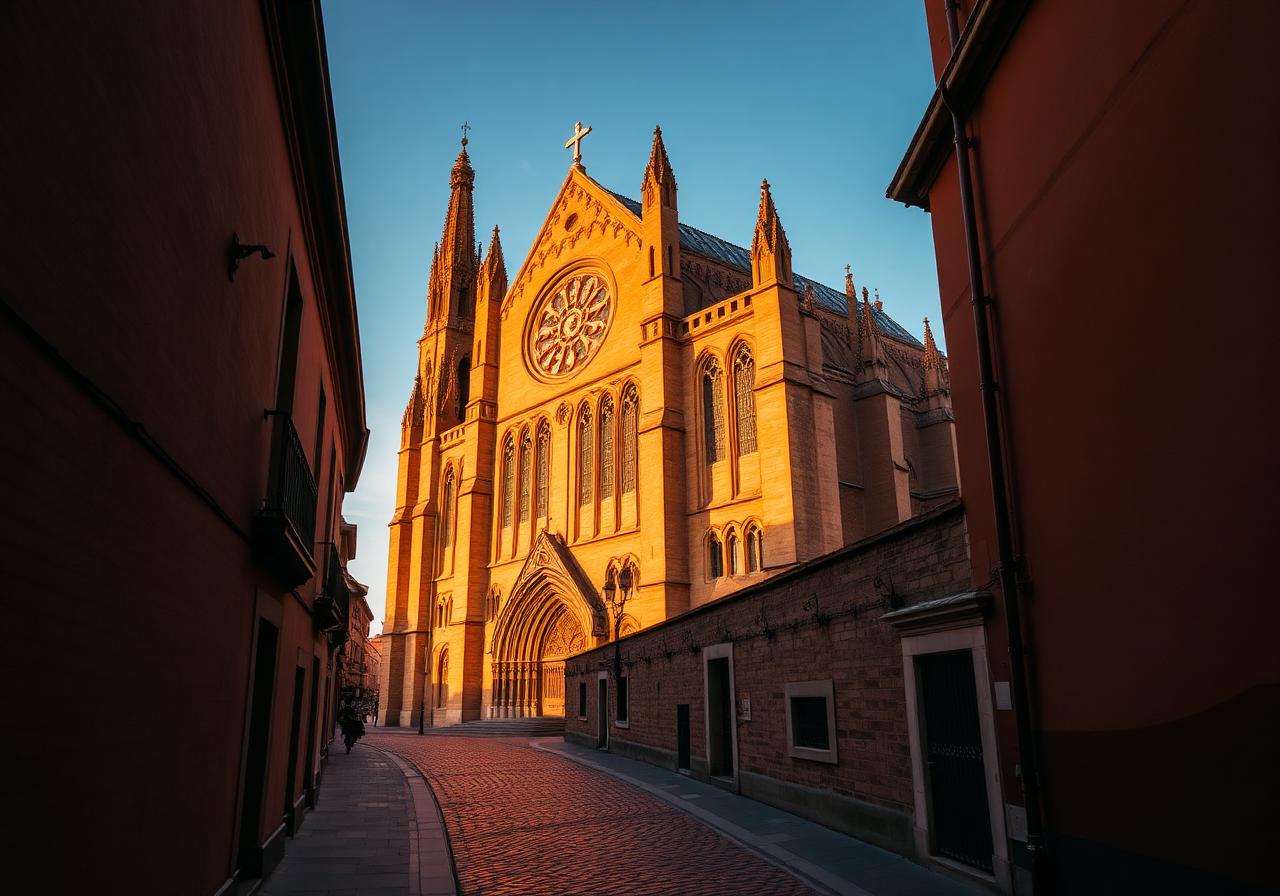
The Camino de Santiago developed during one of the most complex periods in Spanish history: the Reconquista. The Reconquista was the long medieval process in which Christian kingdoms in the north of the Iberian Peninsula expanded southward into territories ruled by Muslim powers. It lasted for centuries and shaped the political, religious, and cultural identity of medieval Spain. The Camino was not separate from this world. It grew within it.
The pilgrimage to Santiago de Compostela was a spiritual journey, but it was also connected to royal power, Christian identity, frontier politics, military conflict, settlement, and cultural exchange. Saint James became not only the apostle associated with the tomb in Santiago, but also a powerful symbol used by Christian kingdoms during the Reconquista. Understanding this history helps modern pilgrims see the Camino more clearly. It was never just a peaceful walking trail. It was born in a medieval world of faith, violence, devotion, ambition, and uncertainty.
What was the Reconquista? The Reconquista refers to the long period between the early 8th century and 1492, during which Christian kingdoms in the Iberian Peninsula gradually expanded into territories ruled by Muslim dynasties. After Muslim forces entered Iberia in 711, much of the peninsula came under Islamic rule. Christian polities survived and developed in the north, including Asturias, León, Castile, Navarre, Aragón, and others. Over time, these kingdoms expanded southward through war, diplomacy, settlement, alliances, and political change. The Reconquista was not a simple story of two unified sides. It was complex, with shifting alliances between Christian and Muslim rulers, internal conflicts, cultural exchange, trade, coexistence, and violence. The Camino grew in this complicated medieval landscape.
The discovery of Saint James' tomb during this period. The reported discovery of Saint James' tomb in Galicia took place in the 9th century, during the early centuries of the Reconquista. According to tradition, the tomb was found after a hermit named Pelayo saw mysterious lights over a field. Bishop Theodomir investigated, and the remains were identified as those of Saint James the Apostle. King Alfonso II of Asturias is said to have traveled to the site, giving royal recognition to the shrine. This happened in the context of northern Christian kingdoms seeking religious identity, legitimacy, and unity. The discovery of an apostle's tomb in the northwest gave Santiago enormous spiritual and political importance.
Santiago as a symbol of Christian identity. In medieval Spain, Santiago de Compostela became more than a pilgrimage destination. It became a symbol of Christian identity and divine favor. For the northern Christian kingdoms, having the tomb of an apostle within their territory was powerful. It connected their lands to the early Church and gave religious significance to their political struggles. Pilgrimage to Santiago helped strengthen this identity. Pilgrims from across Europe came to honor Saint James, and their presence reinforced Santiago's importance. The city became both sacred and strategic.
Saint James the Apostle and Saint James the Warrior. Saint James was originally remembered as one of Jesus' apostles and a martyr. But during the Reconquista, another image became prominent: Santiago Matamoros, or Saint James the Moor-slayer. This medieval image portrayed Saint James as a warrior on horseback, aiding Christian forces in battle against Muslims. The most famous legend connected to this image is the Battle of Clavijo, where Saint James was said to have miraculously appeared to support Christian troops. Modern historians generally treat the Battle of Clavijo legend with skepticism. But the story became deeply influential in medieval Spain. It transformed Saint James from pilgrim apostle into military patron.
A difficult and sensitive legacy. The image of Santiago Matamoros is one of the most difficult parts of Camino history. It reflects a medieval world shaped by religious conflict, warfare, and identity. For many modern pilgrims, the image is uncomfortable because it celebrates violence against Muslims and simplifies a complex history. Today, it is important to approach this legacy with honesty and sensitivity. The Camino can be a route of peace, hospitality, and personal transformation while still carrying historical layers connected to conflict and exclusion. Understanding the past does not mean romanticizing every part of it.
The Camino and royal power. Kings and nobles supported the Camino during the Reconquista. They funded churches, monasteries, hospitals, roads, bridges, and towns along pilgrimage routes. This support helped pilgrims travel more safely and helped Santiago grow in importance. But royal support was not only spiritual. It also served political goals. Supporting the Camino helped rulers strengthen Christian identity, encourage settlement, connect regions, develop towns, and demonstrate devotion. The pilgrimage route became part of kingdom-building. The road to Santiago helped organize territory as much as it served pilgrims.
The Camino Francés and northern expansion. The Camino Francés became especially important as Christian kingdoms expanded and stabilized northern Spain. The route crossed regions like Navarre, La Rioja, Castile, León, and Galicia. As these regions developed, the pilgrimage brought people, money, ideas, and infrastructure. Towns along the route grew. Foreign settlers, especially from France and other parts of Europe, were encouraged to settle in some areas. These communities helped develop trade, crafts, and urban life. The Camino was both a religious road and a tool of development.
Pilgrimage and repopulation. During the Reconquista, rulers often encouraged repopulation and settlement in territories under their control. The Camino helped with this process. Towns along the route offered opportunities for merchants, artisans, innkeepers, farmers, clergy, and builders. Pilgrims needed services. Communities grew to meet those needs. In some areas, settlers from beyond the Pyrenees, often called 'Franks' in medieval sources, played roles in developing Camino towns. This helped connect northern Spain with the wider European world.
Monasteries and churches as anchors of power. Monasteries and churches along the Camino were not only spiritual centers. They were also landholders, economic institutions, and symbols of authority. During the Reconquista, religious institutions helped organize territory and support settlement. They offered hospitality to pilgrims, preserved documents, managed land, and promoted devotion. A monastery on the Camino could serve many purposes at once: prayer, shelter, administration, agriculture, education, and political influence. This made the Church a central force in the development of the route.
Military orders and the Camino. Military religious orders, including the Knights Templar and other Iberian orders, were active in medieval Spain. Their main roles often involved defense, frontier warfare, landholding, and settlement. Some held properties or influence near pilgrimage routes. Although the Templars were not created specifically to guard Camino pilgrims, military orders contributed to the broader security and political landscape through which pilgrims traveled. Their presence reminds us that the Camino existed in a world where faith and warfare were often closely connected.
The Camino as a European connection. The Camino helped connect Christian Spain to the rest of Europe. During the Reconquista, this connection mattered. Pilgrims from France, England, Italy, Germany, and other regions traveled to Santiago. They brought money, ideas, religious devotion, artistic styles, and cultural influence. The Camino made northern Spain part of a wider European pilgrimage network. This helped strengthen Santiago's importance and reinforced ties between Iberian kingdoms and other parts of Christendom.
Art and architecture during the Reconquista. The growth of the Camino during the Reconquista helped spread artistic and architectural styles. Romanesque and later Gothic churches, cathedrals, bridges, monasteries, and hospitals developed along the route. Many were influenced by styles and craftsmen connected to wider Europe. Cities like Burgos, León, and Santiago became major centers of religious architecture. The Camino was not only a road for pilgrims. It was a road for art, building techniques, sculpture, music, and ideas.
Cultural exchange and complexity. Although the Reconquista is often described through conflict, medieval Iberia was also a place of cultural exchange. Christian, Muslim, and Jewish communities interacted in many ways across the peninsula. There were periods of coexistence, cooperation, trade, translation, and shared knowledge, as well as persecution, war, and violence. The Camino passed through Christian-controlled northern regions, but it existed within a peninsula shaped by multiple cultures. A mature understanding of Camino history must include this complexity. The medieval world was not simple.
The Camino and the idea of pilgrimage as spiritual warfare. In medieval Christianity, pilgrimage could sometimes be understood as a form of spiritual struggle. Pilgrims fought against sin, hardship, temptation, fear, and physical weakness. During the Reconquista, this spiritual language existed alongside actual military conflict. Saint James could be imagined both as a guide for pilgrims and as a warrior patron. For modern readers, this overlap may feel strange or troubling. But it helps explain how medieval people understood faith, journey, and conflict.
The decline of the Reconquista world. The Reconquista formally ended in 1492 with the fall of Granada, the last Muslim-ruled kingdom in Iberia. By then, the Camino had already passed its medieval peak. Religious, political, and social changes in Europe would later affect pilgrimage patterns. The world that had shaped the medieval Camino gradually changed. But the symbols and institutions created during those centuries remained. Santiago, the cathedral, the routes, the churches, and the legends continued to carry memories of that era.
How modern pilgrims should understand this history. Modern pilgrims should approach the Camino's Reconquista history with balance. It is part of the route's real past and should not be ignored. The Camino was shaped by medieval Christian kingdoms, religious identity, royal power, and conflict. At the same time, modern pilgrims do not have to adopt the worldview of the Middle Ages. Today, the Camino is walked by people of many religions, cultures, backgrounds, and beliefs. It has become a route of encounter, reflection, hospitality, and peace for many. Knowing the difficult parts of history can make the modern Camino more meaningful, not less.
Why this history still matters. The Reconquista matters to Camino history because it explains much of the world in which the pilgrimage developed. It shaped the rise of Santiago, the political importance of Saint James, the growth of towns, the support of kings, the construction of churches, and the identity of the route. Without this context, the Camino can seem like a timeless walking path. With it, we see the Camino as part of a living, complicated history. The road to Santiago was built by faith, but also by power, conflict, settlement, and memory.
Final thoughts. The Camino de Santiago developed during the Reconquista, a long and complex period in Spanish history. During this time, Santiago became a powerful religious and political symbol. Saint James was honored as an apostle and imagined as a warrior. Kings supported the pilgrimage. Churches, monasteries, towns, roads, and hospitals grew along the route. Pilgrims from across Europe connected northern Spain to the wider Christian world. This history includes beauty and discomfort, devotion and violence, hospitality and power. For modern pilgrims, understanding the Camino during the Reconquista adds depth to the journey. The Camino is not perfect history. It is human history. And like the walk itself, it asks us to keep moving with open eyes. Buen Camino.
Keep exploring
Next stops & related posts
Towns, stages, and stories connected to this article — your jumping-off points to plan the next stretch of the Camino.
Pilgrim guides
- Roncesvalles monastery & albergue
- Samos monastery lodging
- Foncebadón mountain albergues
- O Cebreiro pilgrim shelters
- All lodging articles
- Camino Primitivo (mountain terrain)
- Camino del Norte (coastal weather)
- Foncebadón (high pass)
- O Cebreiro (Galician mountains)
- Santiago de Compostela cathedral
- León cathedral city
- Burgos cathedral city
- Samos monastery
- Roncesvalles monastery
- O Cebreiro pre-Romanesque church
- All history articles
Towns to visit
Suggested stages
Related routes
Related posts
Culture
history of the Camino de Santiago
From the legend of Saint James and medieval pilgrimage routes to the modern revival — a thousand-year story behind the Way of Saint James.
Practical
Camino Francés guide
Everything you need to plan the most popular Camino: 33 stages from Saint-Jean-Pied-de-Port to Santiago, with town stops, distances, and honest tips.
Food
Camino de Santiago food
From Basque pintxos to Galician pulpo, the Camino is a tour of Spain's regional cooking. Here's what to order in each region you walk through.
More posts like this
Articles that share keywords, routes, or towns with this one.
Culture
The Complete History of the Camino de Santiago
- history of the Camino de Santiago
- 1 shared route
Culture
How the Camino de Santiago Became One of Europe's Great Pilgrimages
- 1 shared route
- 2 shared towns
Culture
The Role of Monasteries and Churches Along the Camino de Santiago
- 1 shared route
- 2 shared towns
Culture
The History of the Camino Francés
- 1 shared route
- 2 shared towns
Read next
Culture
How the Camino de Santiago Became One of Europe's Great Pilgrimages
Discover how the Camino de Santiago grew from a local shrine in Galicia into one of medieval Europe's greatest pilgrimage routes.
14 min read
Culture
The Role of Monasteries and Churches Along the Camino de Santiago
Explore the role of monasteries and churches along the Camino de Santiago and how they supported pilgrims through shelter, prayer, hospitality, and history.
12 min read
Culture
The History of the Camino Francés
Discover the history of the Camino Francés, the most famous route of the Camino de Santiago, from its medieval origins to its modern revival.
13 min read
Culture
How the Camino Shaped Towns Across Northern Spain
Discover how the Camino de Santiago shaped towns across northern Spain through pilgrimage, trade, churches, hospitals, markets, and medieval hospitality.
13 min read
Culture
The History of Pilgrim Hospitals on the Camino de Santiago
Discover the history of pilgrim hospitals on the Camino de Santiago and how medieval hospitality, shelter, food, and care helped pilgrims survive the journey to Santiago.
13 min read
Culture
The Complete History of the Camino de Santiago
From the legend of Saint James and medieval pilgrimage routes to the modern revival — a thousand-year story behind the Way of Saint James.
14 min read