
Culture
The Complete History of the Camino de Santiago
From the legend of Saint James and medieval pilgrimage routes to the modern revival — a thousand-year story behind the Way of Saint James.
April 28, 2026 · 14 min read
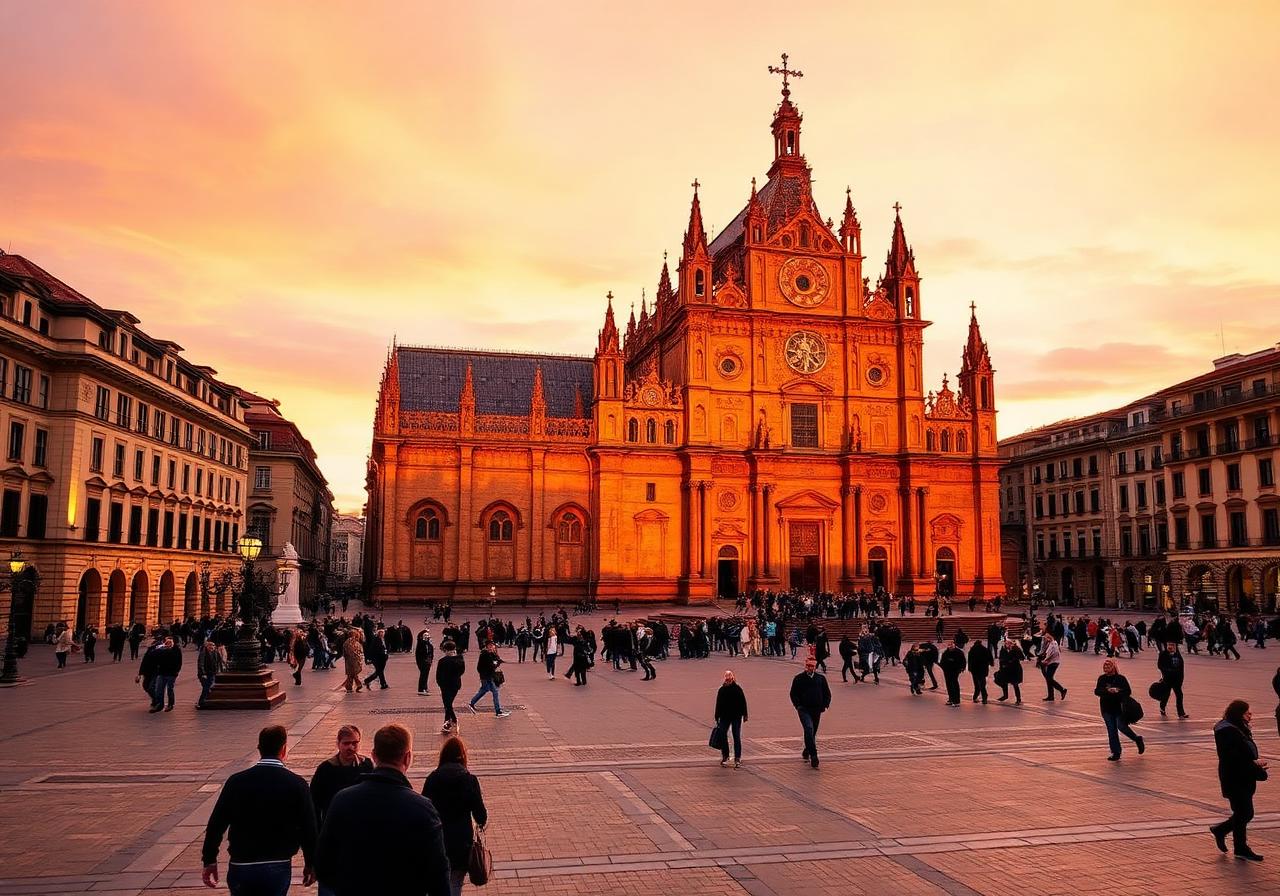
The Camino de Santiago is more than a walking route. It is one of Europe's oldest and most important pilgrimage traditions, carrying more than a thousand years of history, faith, hardship, hospitality, and human connection.
Known in English as the Way of Saint James, the Camino leads pilgrims toward Santiago de Compostela in Galicia, northwestern Spain. For centuries, people have walked these routes for religious devotion, penance, healing, adventure, grief, gratitude, and self-discovery. Some arrive with deep faith. Others arrive with questions. Many leave changed.
The history of the Camino is not just the story of one road. It is the story of medieval Europe, Christian pilgrimage, ancient towns, monasteries, kings, legends, symbols, wars, decline, revival, and the enduring human desire to walk toward something meaningful.
What is the Camino de Santiago? The Camino is a network of pilgrimage routes that lead to Santiago de Compostela, where tradition says the remains of Saint James the Apostle are buried. Rather than a single path, it is made up of many routes across Spain, Portugal, France, and beyond. The most famous is the Camino Francés, which traditionally begins in Saint-Jean-Pied-de-Port and crosses northern Spain through Pamplona, Burgos, and León before reaching Santiago. Other important routes include the Camino Portugués, Camino del Norte, Camino Primitivo, Camino Inglés, Vía de la Plata, and the extensions to Finisterre and Muxía.
Who was Saint James? Saint James — James the Greater — was one of the twelve apostles. According to tradition, he preached in the Iberian Peninsula before returning to Jerusalem, where he was executed in the 1st century. The central legend of the Camino says his followers carried his body by boat to the coast of Galicia, where his remains were eventually buried in what would become Santiago de Compostela.
The discovery of the tomb. The story of the Camino's rise begins in the 9th century. A hermit named Pelayo is said to have seen mysterious lights shining over a field in Galicia. Local religious authorities investigated and identified the remains as those of Saint James. The site became known as Compostela, often linked to the phrase 'field of stars.' King Alfonso II of Asturias is said to have travelled to the site after the discovery — a journey now associated with the Camino Primitivo, considered one of the earliest pilgrimage routes to Santiago. A church was built over the tomb, and Santiago grew into a major religious centre.
The rise of the medieval pilgrimage. By the 10th, 11th, and 12th centuries, the Camino had become one of the great pilgrimages of medieval Europe, alongside Rome and Jerusalem. Pilgrims came from France, Italy, Germany, England, Ireland, Scandinavia and beyond, often following established routes that became the Camino Francés. The journey was difficult and dangerous, but a growing network of monasteries, churches, bridges, hospitals, and pilgrim hostels supported it — infrastructure that shaped many of the towns pilgrims still visit today.
Why did people walk? Most medieval pilgrims walked for religious reasons: devotion, penance, thanksgiving, or healing. Some asked forgiveness; others gave thanks for surviving illness; some were sent as part of a vow or punishment. Even then, motivations were mixed — faith, adventure, community, danger, trade, and travel all blended together. That mix of physical challenge and inner reflection remains part of the Camino's power today.
The Codex Calixtinus. One of the most important documents in Camino history is the Codex Calixtinus, a 12th-century manuscript that includes sermons, miracle stories, liturgical texts and, in one section, an early pilgrim guide with advice on routes, towns, rivers, churches and dangers. It functioned much like a medieval Camino guidebook and shows that by the 12th century the pilgrimage was already a well-established international tradition.
Churches, monasteries and pilgrim hospitals. The growth of the Camino transformed northern Spain. Monasteries offered food, shelter and medical care. Churches became places of rest and prayer. Pilgrim hospitals cared for the sick. Many of the great cathedrals along the route — Burgos, León, Santiago — were built or expanded during the height of the pilgrimage. Walking the Camino today often feels like moving through a living museum of medieval Europe.
The symbols of the Camino. Two symbols dominate: the scallop shell and the yellow arrow. Pilgrims may once have collected shells on the Galician coast as proof they had completed the journey, and the shell's lines came to represent the many routes converging on Santiago. The yellow arrows are more modern — popularised in the late 20th century to mark the route across Spain. Today, spotting a yellow arrow is one of the most reassuring sights on the Camino.
The Camino and the Reconquista. The Camino developed during the centuries of the Reconquista, when Christian kingdoms expanded southward into territories ruled by Muslim powers. Santiago became not only a religious destination but a powerful symbol in medieval Christian Spain — including the controversial figure of Santiago Matamoros, now viewed with much more historical sensitivity. This part of Camino history is important but complex; pilgrimage, politics, religion, and identity were deeply entangled.
Decline. After its medieval peak, pilgrimage to Santiago gradually declined. The Protestant Reformation reshaped religious practice in much of Europe. Wars, political instability, and changing travel patterns reduced the number of long-distance pilgrims. By the 19th and early 20th centuries, the Camino was far less internationally known than it had been in the Middle Ages.
The modern revival. The Camino began to revive in the 20th century, especially in its second half. Local priests, historians, volunteers and associations restored route markings, documented paths and reopened pilgrim hostels. One of the most influential modern figures was Father Elías Valiña, a priest from O Cebreiro, who helped mark the Camino Francés with the now-iconic yellow arrows. In 1987, the Camino was declared the first European Cultural Route by the Council of Europe. In 1993, the Camino Francés and routes in northern Spain were recognised by UNESCO as a World Heritage Site. Numbers have grown dramatically ever since.
The Camino today. Hundreds of thousands of people now walk each year — for religion, adventure, grief, healing, transition, fitness, culture, or personal reflection. The modern Camino is both ancient and contemporary: pilgrims carry smartphones and lightweight packs, but still sleep in shared albergues, follow yellow arrows, collect stamps in pilgrim passports, and gather around communal tables.
Why the history still matters. Every bridge, cathedral, shell marker, monastery, village, and old stone path is part of a much larger story. When you walk the Camino, you move through centuries of faith, hardship, hospitality, conflict and renewal. The Camino has survived because it continues to speak to something universal — the human need for journeys, time to think, community, and a path.
The history of the Camino de Santiago begins with legend, faith, and the discovery of a tomb in Galicia. It grew into one of medieval Europe's greatest pilgrimages, declined over time, and was revived into the global walking journey we know today. But the Camino is not only history — it is still alive. Every pilgrim adds another story to the path. Buen Camino.
Keep exploring
Next stops & related posts
Towns, stages, and stories connected to this article — your jumping-off points to plan the next stretch of the Camino.
Pilgrim guides
- Roncesvalles monastery & albergue
- Samos monastery lodging
- Foncebadón mountain albergues
- O Cebreiro pilgrim shelters
- All lodging articles
- Camino Primitivo (mountain terrain)
- Camino del Norte (coastal weather)
- Foncebadón (high pass)
- O Cebreiro (Galician mountains)
- Santiago de Compostela cathedral
- León cathedral city
- Burgos cathedral city
- Samos monastery
- Roncesvalles monastery
- O Cebreiro pre-Romanesque church
- All history articles
Towns to visit
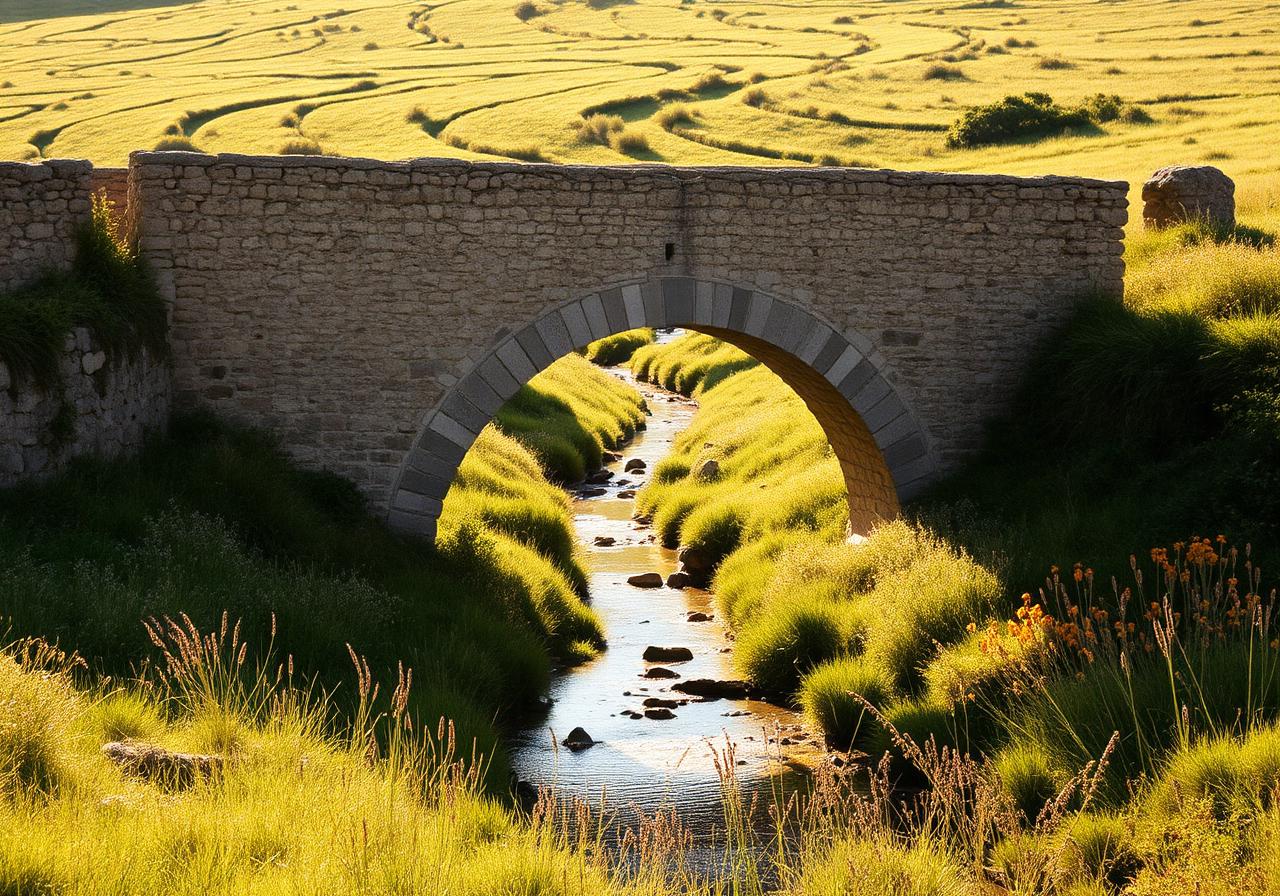
Pyrénées-Atlantiques, France
Saint-Jean-Pied-de-Port
The traditional starting point — a fortified Basque town at the foot of the Pyrenees.
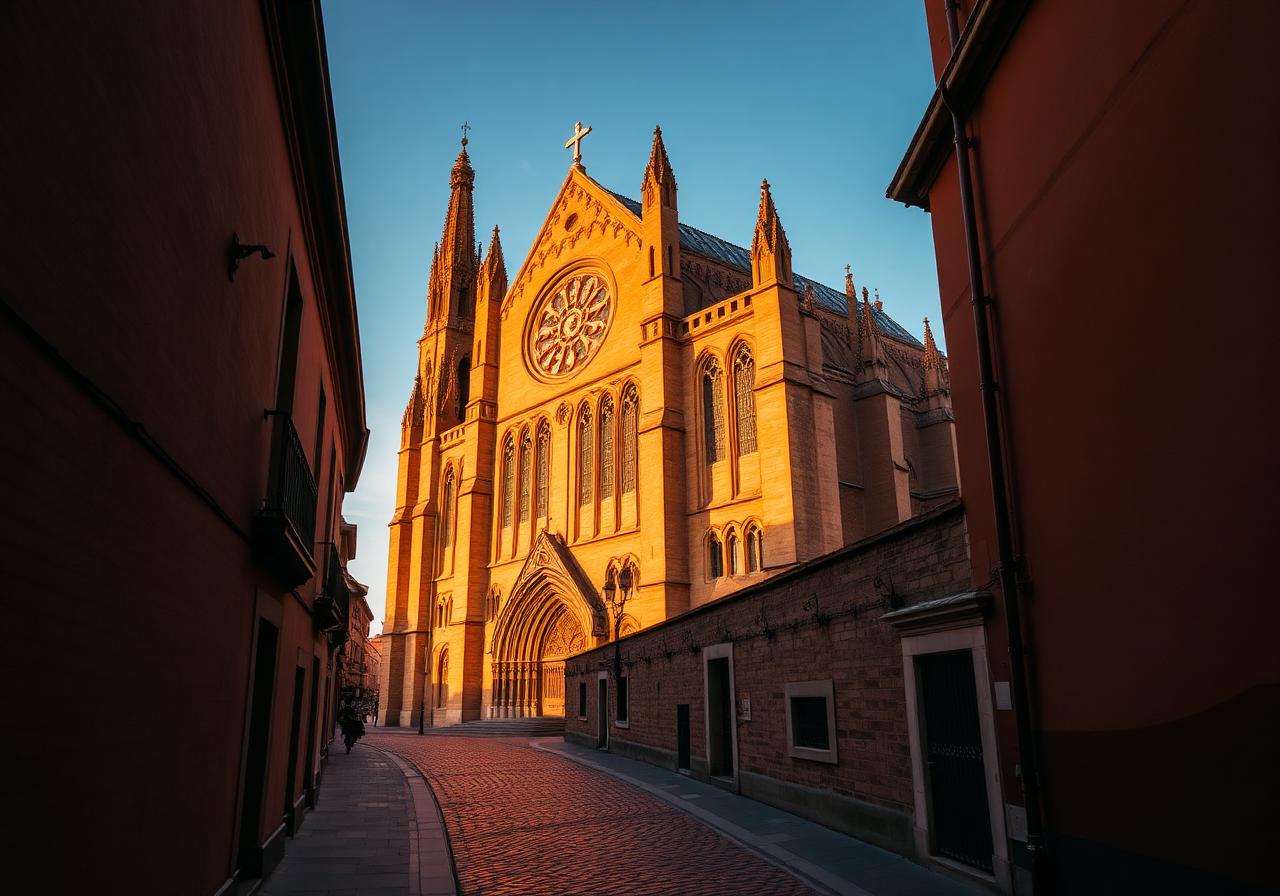
Castilla y León
Burgos
Castile's medieval capital — home to one of Spain's greatest Gothic cathedrals.
Galicia
Santiago de Compostela
The journey's end — and for many pilgrims, a new beginning.
Castilla y León
León
A spirited cathedral city marking the gateway to the final third of the Francés.
Navarra
Pamplona
The first city on the Francés — Hemingway's town, famous for the Running of the Bulls.
Lugo, Galicia
O Cebreiro
A mountain hamlet of Celtic pallozas — the dramatic doorway to Galicia.
Suggested stages
Camino Francés · Stage 1
Saint-Jean-Pied-de-Port → Roncesvalles
25 km · 1390 m · Challenging
Camino Francés · Stage 2
Roncesvalles → Zubiri
22 km · 220 m · Moderate
Camino Francés · Stage 3
Zubiri → Pamplona
21 km · 80 m · Easy
Camino Portugués · Stage 1
Porto → Vilarinho
27 km · 320 m · Moderate
Camino Portugués · Stage 2
Vilarinho → Barcelos
30 km · 250 m · Moderate
Camino Portugués · Stage 3
Barcelos → Ponte de Lima
33 km · 300 m · Challenging
Related routes
More Camino history
The people, places, and traditions that shaped a thousand years of pilgrimage to Santiago de Compostela.
Culture
Who Was Saint James and Why Is He Connected to Santiago?
Learn who Saint James was, why he is connected to Santiago de Compostela, and how his legend became the foundation of the Camino de Santiago pilgrimage.
Culture
The Discovery of Saint James' Tomb
Learn the story behind the discovery of Saint James' tomb in Santiago de Compostela and how this legend became the foundation of the Camino de Santiago pilgrimage.
Culture
Why Is Santiago de Compostela Important?
Discover why Santiago de Compostela is important, from the legend of Saint James and its medieval pilgrimage history to its role as the final destination of the Camino de Santiago.
Culture
The Medieval Pilgrim Experience on the Camino de Santiago
Discover what life was like for medieval pilgrims walking the Camino de Santiago, from dangerous roads and simple shelters to faith, hardship, and hospitality.
Culture
How the Camino de Santiago Became One of Europe's Great Pilgrimages
Discover how the Camino de Santiago grew from a local shrine in Galicia into one of medieval Europe's greatest pilgrimage routes.
Culture
The Codex Calixtinus: The First Camino Guidebook?
Learn about the Codex Calixtinus, the 12th-century manuscript often called the first Camino guidebook, and its importance in the history of the Camino de Santiago.
Related posts
Culture
Camino de Santiago pilgrimage history
Discover how the Camino de Santiago grew from a local shrine in Galicia into one of medieval Europe's greatest pilgrimage routes.
Culture
churches along the Camino de Santiago
Explore the role of monasteries and churches along the Camino de Santiago and how they supported pilgrims through shelter, prayer, hospitality, and history.
Practical
Camino Francés guide
Everything you need to plan the most popular Camino: 33 stages from Saint-Jean-Pied-de-Port to Santiago, with town stops, distances, and honest tips.
More posts like this
Articles that share keywords, routes, or towns with this one.
Culture
The Role of Monasteries and Churches Along the Camino de Santiago
- history of the Camino de Santiago
- 3 shared routes
Culture
How the Camino de Santiago Became One of Europe's Great Pilgrimages
- 3 shared routes
- 3 shared towns
Food
What to Eat on the Camino de Santiago (Regional Food Guide)
- 3 shared routes
- 2 shared towns
Culture
Who Was Saint James and Why Is He Connected to Santiago?
- who was Saint James
- 3 shared routes
Read next
Culture
How the Camino de Santiago Became One of Europe's Great Pilgrimages
Discover how the Camino de Santiago grew from a local shrine in Galicia into one of medieval Europe's greatest pilgrimage routes.
14 min read
Culture
The Role of Monasteries and Churches Along the Camino de Santiago
Explore the role of monasteries and churches along the Camino de Santiago and how they supported pilgrims through shelter, prayer, hospitality, and history.
12 min read
Food
What to Eat on the Camino de Santiago (Regional Food Guide)
From Basque pintxos to Galician pulpo, the Camino is a tour of Spain's regional cooking. Here's what to order in each region you walk through.
12 min read
Culture
Who Was Saint James and Why Is He Connected to Santiago?
Learn who Saint James was, why he is connected to Santiago de Compostela, and how his legend became the foundation of the Camino de Santiago pilgrimage.
12 min read
Culture
Why Is Santiago de Compostela Important?
Discover why Santiago de Compostela is important, from the legend of Saint James and its medieval pilgrimage history to its role as the final destination of the Camino de Santiago.
11 min read
Culture
The Discovery of Saint James' Tomb
Learn the story behind the discovery of Saint James' tomb in Santiago de Compostela and how this legend became the foundation of the Camino de Santiago pilgrimage.
12 min read