
Culture
How the Camino de Santiago Became One of Europe's Great Pilgrimages
Discover how the Camino de Santiago grew from a local shrine in Galicia into one of medieval Europe's greatest pilgrimage routes.
April 29, 2026 · 14 min read
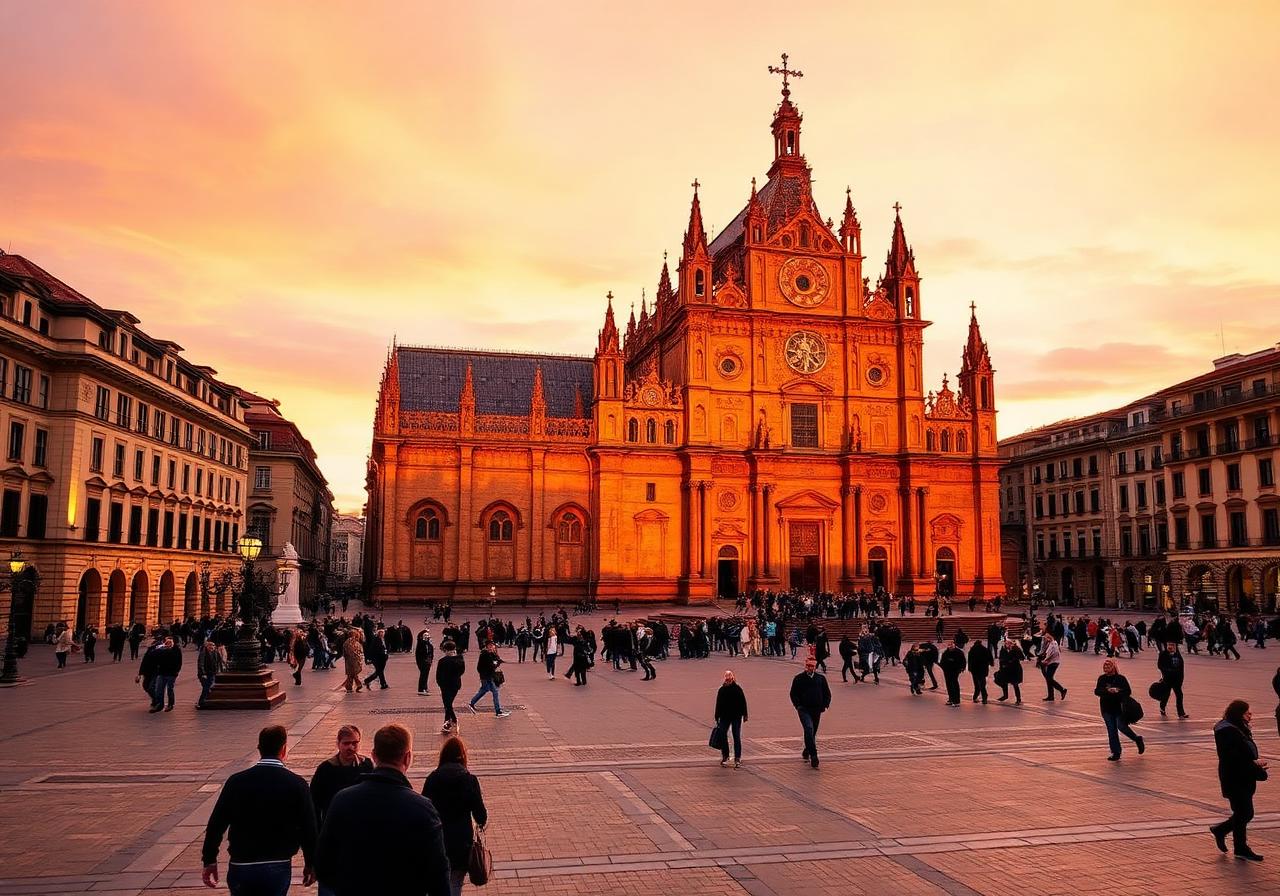
The Camino de Santiago did not become famous overnight. What began as a shrine connected to the tomb of Saint James in a remote corner of Galicia slowly grew into one of the most important pilgrimage routes in medieval Europe. Over centuries, kings, bishops, monks, townspeople, builders, and pilgrims helped transform the Way of Saint James into a vast network of roads, churches, hospitals, bridges, hostels, markets, and traditions.
By the height of the Middle Ages, Santiago de Compostela stood alongside Jerusalem and Rome as one of the great destinations of Christian pilgrimage. But how did this happen? The rise of the Camino was shaped by faith, politics, geography, infrastructure, storytelling, relics, royal support, and the movement of thousands of ordinary people who chose to walk toward Santiago.
The discovery that started the pilgrimage. The Camino's rise began with the reported discovery of Saint James' tomb in the 9th century. According to tradition, a hermit named Pelayo saw mysterious lights over a field in Galicia. Bishop Theodomir investigated the site and identified the remains found there as those of Saint James the Apostle. King Alfonso II of Asturias is said to have traveled to the site after hearing of the discovery. This journey is often associated with the Camino Primitivo, one of the earliest routes to Santiago. A small church was built over the tomb, and a local place of devotion began to grow. At first, Santiago was important mainly within the Christian kingdoms of northern Spain. But over time, its reputation spread far beyond Galicia.
Why relics mattered in medieval Europe. To understand how the Camino became a great pilgrimage, it helps to understand the importance of relics. In medieval Christianity, relics were physical remains or objects connected to saints. They could include bones, clothing, personal items, or objects associated with holy figures. People believed relics were spiritually powerful. They were connected to healing, miracles, forgiveness, protection, and divine presence. A shrine that claimed to hold the remains of an apostle was especially important. Apostles were the direct followers of Jesus. Their tombs carried extraordinary religious significance. Because Santiago claimed the remains of Saint James, it became a place worth traveling to from across Europe.
Santiago's place beside Rome and Jerusalem. In the Middle Ages, three pilgrimage destinations held special importance in Western Christianity: Jerusalem, Rome, and Santiago de Compostela. Jerusalem was connected to the life, death, and resurrection of Jesus. Rome was connected to Saints Peter and Paul. Santiago was connected to Saint James. For many Christians in western Europe, Santiago was more reachable than Jerusalem but still spiritually powerful. The journey was long and difficult, but possible. This helped Santiago grow into one of the great pilgrim destinations of the medieval world.
Royal support helped Santiago grow. The rise of the Camino was strongly supported by kings and nobles. Rulers in the Christian kingdoms of northern Spain saw Santiago as both a religious and political symbol. Supporting the shrine of Saint James helped strengthen Christian identity and royal authority. Kings gave land, protection, money, and privileges to churches and monasteries connected to the route. They supported the construction of roads, bridges, hospitals, and religious buildings. Royal support made it easier and safer for pilgrims to travel. It also helped Santiago become a city of regional and international importance. Without support from rulers, the Camino likely would not have developed as quickly or as widely.
The Church promoted the pilgrimage. The medieval Church played a central role in spreading the importance of Santiago. Bishops, abbots, monks, and priests promoted the story of Saint James and the spiritual value of visiting his tomb. Pilgrimage was encouraged as an act of devotion, repentance, thanksgiving, or healing. Church institutions along the route offered practical support to pilgrims. Monasteries provided food, shelter, prayer, and medical care. Churches became landmarks and resting places. The Church helped organize the spiritual meaning of the Camino while also building the physical network that made the journey possible.
The Camino Francés became the main route. Although there are many Camino routes, the Camino Francés became the most famous and influential. The Camino Francés developed as the major route from France across northern Spain to Santiago. It passed through important cities and towns such as Pamplona, Burgos, León, Astorga, Ponferrada, and Sarria. This route became popular because it connected with established roads through France and crossed regions with growing pilgrim infrastructure. As more pilgrims walked it, more services were built. As more services were built, even more pilgrims came. Over time, the Camino Francés became the classic route to Santiago.
Roads, bridges, and safe passage. For the Camino to become a great pilgrimage, pilgrims needed roads they could follow and places where they could cross rivers safely. Medieval travel was difficult. Roads could be rough, dangerous, or poorly marked. Rivers could block progress. Bandits, illness, and bad weather were real threats. To support pilgrims, bridges were built and roads improved. Some bridges became famous because of their connection to the pilgrimage. Towns grew around river crossings and strategic points along the route. Infrastructure made pilgrimage more possible. Every bridge, road, and hostel helped turn the Camino from a spiritual idea into a physical journey.
Pilgrim hospitals and hospitality. One of the most important reasons the Camino grew was the development of pilgrim hospitals. In the medieval sense, a hospital was not always like a modern medical institution. It could be a place of hospitality, shelter, food, rest, and care for travelers. Pilgrims often arrived exhausted, hungry, injured, or sick. Hospitals and monasteries provided essential support. This culture of hospitality became part of the identity of the Camino. The idea that pilgrims should be cared for helped sustain the journey across centuries. Even today, the Camino carries echoes of this tradition through albergues, communal meals, volunteer hosts, and the phrase 'Buen Camino.'
The Codex Calixtinus spread Camino knowledge. The Codex Calixtinus, a 12th-century manuscript, played an important role in Camino history. It includes religious texts, stories of miracles, liturgical material, and a guide to the route to Santiago. This guide described towns, rivers, churches, dangers, and local customs along the way. It is often considered one of the earliest pilgrim guidebooks. The Codex shows that by the 12th century, the Camino was already a well-established international pilgrimage. It also helped spread information about the journey and reinforce Santiago's status as a major holy destination.
Miracles and stories increased the Camino's fame. Medieval pilgrims were drawn not only by relics but also by stories. Miracle tales connected to Saint James spread across Europe. Stories of healing, protection, rescue, forgiveness, and divine intervention strengthened the reputation of Santiago. In a world where storytelling was one of the main ways information traveled, miracle stories mattered deeply. They helped people believe that walking to Santiago could change their lives. They also helped build the spiritual authority of the shrine. The more stories spread, the more pilgrims came.
Pilgrims came from across Europe. By the medieval peak of the Camino, pilgrims traveled to Santiago from many regions. They came from France, Italy, England, Ireland, Germany, Scandinavia, Portugal, and other parts of Europe. Some walked from their homes. Others traveled by sea or joined routes already established through France and Spain. This international movement made the Camino more than a Spanish pilgrimage. It became a European cultural route. Pilgrims brought languages, songs, customs, money, ideas, and stories with them. The Camino connected distant places through shared movement toward Santiago.
Towns grew because of the pilgrimage. The Camino helped shape the growth of many towns across northern Spain. Some towns expanded because they served pilgrims. Markets, inns, blacksmiths, food sellers, churches, hospitals, and lodging houses developed along the route. Pilgrims needed food, repairs, shoes, clothing, medical help, spiritual care, and places to sleep. Local economies grew around these needs. In many places, the Camino became part of everyday life. It shaped street layouts, architecture, religious buildings, and local identity. The path did not simply pass through towns. It helped create and sustain them.
The architecture of the Camino. The growth of pilgrimage also influenced architecture. Romanesque churches, monasteries, bridges, hospitals, and later Gothic cathedrals became part of the Camino landscape. Some buildings were designed to accommodate large numbers of pilgrims. Cathedrals in places like Burgos, León, and Santiago became major landmarks. Smaller rural churches offered quiet places of prayer and shelter. The Camino helped spread artistic and architectural styles across regions. Pilgrimage connected builders, craftsmen, religious communities, and patrons. Walking the Camino today still feels like traveling through layers of medieval architecture.
Pilgrimage as penance and transformation. For many medieval Christians, pilgrimage was connected to penance. Walking to Santiago could be a way to seek forgiveness for sins, fulfill a vow, show devotion, or repair one's relationship with God. Some pilgrimages were voluntary. Others were assigned as punishment or spiritual discipline. The difficulty of the journey was part of its meaning. Pain, hunger, distance, discomfort, and uncertainty were not simply obstacles — they were part of the pilgrim experience. This idea still echoes today. Even modern pilgrims often find that physical hardship leads to reflection, humility, and inner change.
The political importance of Santiago. Santiago was not only religiously important. It also became politically significant. During the centuries of conflict known as the Reconquista, Christian kingdoms in the Iberian Peninsula used the figure of Saint James as a symbol of identity and divine support. This political use of Saint James is complex and must be understood carefully today. Medieval representations like Santiago Matamoros reflect a world of religious conflict and conquest that modern pilgrims may find uncomfortable. Still, this history helps explain why Santiago became so important in medieval Spain. The city represented faith, identity, power, and resistance.
The peak of the medieval Camino. The Camino reached its height during the 11th, 12th, and 13th centuries. During this time, Santiago became internationally famous. Pilgrim routes were active, churches and hospitals flourished, and the city grew in wealth and prestige. The cathedral became a major religious and architectural center. The Camino Francés became one of the best-known routes in Europe. At its peak, the Camino was a living network of faith, movement, commerce, and culture.
Why the Camino lasted. Many medieval pilgrimages faded over time, but the Camino endured. It lasted because it had a powerful story, a sacred destination, strong symbols, established routes, and communities built around pilgrim hospitality. It also lasted because walking itself remained meaningful. The Camino offers something simple but profound: a path, a destination, a community, and time to reflect. That combination helped it survive periods of decline and later return as a global pilgrimage.
The Camino's legacy in Europe. The Camino helped connect Europe long before modern tourism. It moved people across borders. It encouraged cultural exchange. It supported towns and religious institutions. It created shared symbols and stories. The Council of Europe later recognized the Camino de Santiago as the first European Cultural Route in 1987, reflecting its importance as a symbol of European heritage and connection. This modern recognition reflects what had been true for centuries: the Camino was never just a Spanish road — it was a European journey.
Final thoughts. The Camino de Santiago became one of Europe's great pilgrimages because it brought together faith, legend, royal support, Church promotion, infrastructure, hospitality, and human longing. The discovery of Saint James' tomb gave pilgrims a sacred destination. The Church and kings helped promote and protect the journey. Monasteries, hospitals, roads, and bridges made the route possible. Stories and symbols gave it meaning. But ultimately, the Camino became great because people kept walking. They walked through fear, illness, devotion, grief, hope, and curiosity. They walked toward Santiago, and in doing so, they helped create one of the most enduring pilgrimage traditions in the world. Buen Camino.
Keep exploring
Next stops & related posts
Towns, stages, and stories connected to this article — your jumping-off points to plan the next stretch of the Camino.
Pilgrim guides
- Roncesvalles monastery & albergue
- Samos monastery lodging
- Foncebadón mountain albergues
- O Cebreiro pilgrim shelters
- All lodging articles
- Camino Primitivo (mountain terrain)
- Camino del Norte (coastal weather)
- Foncebadón (high pass)
- O Cebreiro (Galician mountains)
- Santiago de Compostela cathedral
- León cathedral city
- Burgos cathedral city
- Samos monastery
- Roncesvalles monastery
- O Cebreiro pre-Romanesque church
- All history articles
Towns to visit
Navarra
Pamplona
The first city on the Francés — Hemingway's town, famous for the Running of the Bulls.
Castilla y León
Burgos
Castile's medieval capital — home to one of Spain's greatest Gothic cathedrals.
León
Astorga
Roman city, Maragato heartland, and the unlikely home of a Gaudí palace.
El Bierzo, León
Ponferrada
A Templar castle town at the gateway to the Bierzo wine country.
Lugo, Galicia
Sarria
Where the busiest 100-km final push begins — and a charming medieval upper town.
Galicia
Santiago de Compostela
The journey's end — and for many pilgrims, a new beginning.
Castilla y León
León
A spirited cathedral city marking the gateway to the final third of the Francés.
Suggested stages
Camino Francés · Stage 3
Zubiri → Pamplona
21 km · 80 m · Easy
Camino Francés · Stage 4
Pamplona → Puente la Reina
24 km · 420 m · Moderate
Camino Francés · Stage 5
Puente la Reina → Estella
22 km · 300 m · Moderate
Camino Portugués · Stage 1
Porto → Vilarinho
27 km · 320 m · Moderate
Camino Portugués · Stage 2
Vilarinho → Barcelos
30 km · 250 m · Moderate
Camino Portugués · Stage 3
Barcelos → Ponte de Lima
33 km · 300 m · Challenging
Related routes
More Camino history
How the Camino grew into one of the great medieval pilgrimages of Europe — and the routes, symbols, and people behind it.
Culture
The Complete History of the Camino de Santiago
From the legend of Saint James and medieval pilgrimage routes to the modern revival — a thousand-year story behind the Way of Saint James.
Culture
The Medieval Pilgrim Experience on the Camino de Santiago
Discover what life was like for medieval pilgrims walking the Camino de Santiago, from dangerous roads and simple shelters to faith, hardship, and hospitality.
Culture
The Codex Calixtinus: The First Camino Guidebook?
Learn about the Codex Calixtinus, the 12th-century manuscript often called the first Camino guidebook, and its importance in the history of the Camino de Santiago.
Culture
The Role of Monasteries and Churches Along the Camino de Santiago
Explore the role of monasteries and churches along the Camino de Santiago and how they supported pilgrims through shelter, prayer, hospitality, and history.
Culture
The History of the Camino Francés
Discover the history of the Camino Francés, the most famous route of the Camino de Santiago, from its medieval origins to its modern revival.
Culture
Why Did Pilgrims Walk to Finisterre?
Discover why pilgrims walked from Santiago to Finisterre, the "end of the world," and how this Atlantic extension became one of the most meaningful parts of the Camino.
Related posts
Culture
churches along the Camino de Santiago
Explore the role of monasteries and churches along the Camino de Santiago and how they supported pilgrims through shelter, prayer, hospitality, and history.
Culture
history of the Camino de Santiago
From the legend of Saint James and medieval pilgrimage routes to the modern revival — a thousand-year story behind the Way of Saint James.
Practical
Camino Francés guide
Everything you need to plan the most popular Camino: 33 stages from Saint-Jean-Pied-de-Port to Santiago, with town stops, distances, and honest tips.
More posts like this
Articles that share keywords, routes, or towns with this one.
Culture
The Role of Monasteries and Churches Along the Camino de Santiago
- 3 shared routes
- 4 shared towns
Culture
The Complete History of the Camino de Santiago
- 3 shared routes
- 3 shared towns
Culture
How the Camino de Santiago Declined and Was Revived
- 3 shared routes
- 2 shared towns
Practical
How Long Does It Take to Walk the Camino? (Route Breakdown)
- 3 shared routes
- 2 shared towns
Read next
Culture
The Role of Monasteries and Churches Along the Camino de Santiago
Explore the role of monasteries and churches along the Camino de Santiago and how they supported pilgrims through shelter, prayer, hospitality, and history.
12 min read
Culture
The Complete History of the Camino de Santiago
From the legend of Saint James and medieval pilgrimage routes to the modern revival — a thousand-year story behind the Way of Saint James.
14 min read
Culture
How the Camino de Santiago Declined and Was Revived
Discover how the Camino de Santiago declined after the Middle Ages and how it was revived into one of the world's most famous pilgrimage routes today.
13 min read
Practical
How Long Does It Take to Walk the Camino? (Route Breakdown)
Realistic timelines for every major Camino route, with daily distance averages and tips for fitting it into a working life.
7 min read
Food
What to Eat on the Camino de Santiago (Regional Food Guide)
From Basque pintxos to Galician pulpo, the Camino is a tour of Spain's regional cooking. Here's what to order in each region you walk through.
12 min read
Culture
Who Was Saint James and Why Is He Connected to Santiago?
Learn who Saint James was, why he is connected to Santiago de Compostela, and how his legend became the foundation of the Camino de Santiago pilgrimage.
12 min read