
Culture
The Templar Knights and the Camino de Santiago
Explore the connection between the Knights Templar and the Camino de Santiago, including medieval protection, castles, legends, and the Templar presence along the Way.
April 29, 2026 · 12 min read
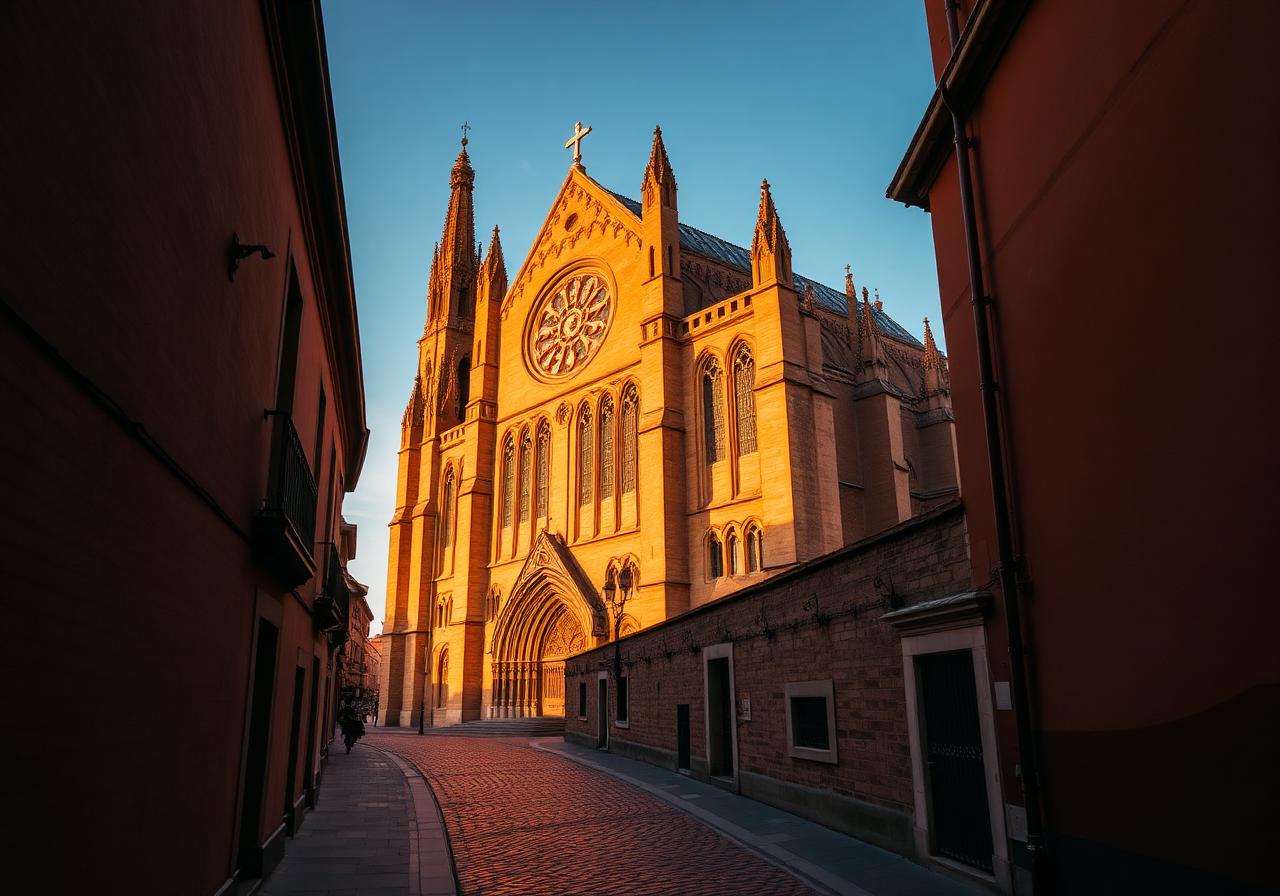
Few groups in medieval history capture the imagination like the Knights Templar. Their story is filled with faith, war, wealth, secrecy, castles, legends, and sudden downfall. Because the Camino de Santiago developed during the same medieval world, it is no surprise that the Templars are often connected to the Camino in popular imagination. But what was their real relationship with the Way of Saint James?
The answer is more grounded than many myths suggest, but still fascinating. The Knights Templar were part of the wider religious and military world of medieval Spain. They held lands, built or occupied fortifications, supported Christian territories, and had a presence in regions crossed by pilgrims. In some places, especially Ponferrada on the Camino Francés, the Templar connection is still visible today. The Templars were not the secret masters of the Camino, but they were part of its medieval landscape.
Who were the Knights Templar? The Knights Templar were a medieval military religious order founded in the early 12th century. Their original purpose was to protect Christian pilgrims traveling to the Holy Land after the First Crusade. They combined monastic vows with military service, making them both monks and warriors. Templars took vows of poverty, chastity, and obedience, but unlike ordinary monks, they also trained for battle. Over time, they became one of the most powerful and wealthy institutions in medieval Europe. They owned land, managed estates, operated financial networks, built castles, and participated in military campaigns. Their official name was the Poor Fellow-Soldiers of Christ and of the Temple of Solomon, but they became known simply as the Knights Templar.
Why were the Templars in Spain? The Templars became active in the Iberian Peninsula during the Middle Ages, especially in the context of the Reconquista. The Reconquista was the long period in which Christian kingdoms in northern Iberia expanded into territories ruled by Muslim powers. Military religious orders played important roles in frontier defense, settlement, and warfare. The Templars received lands, castles, privileges, and responsibilities from kings and nobles. Their presence in Spain was connected to both religious devotion and military strategy. Because the Camino passed through parts of northern Spain, some Templar lands and strongholds were near pilgrimage routes.
Were the Templars created to protect Camino pilgrims? Not exactly. The Knights Templar were originally founded to protect pilgrims in the Holy Land, especially those traveling to Jerusalem. Their first mission was not the Camino de Santiago. However, because they were a military religious order associated with protecting Christians and holding strategic locations, they are often linked with the idea of pilgrim protection more broadly. In Spain, Templar houses and castles may have contributed to regional security in areas crossed by travelers and pilgrims. But it would be inaccurate to say the order was created specifically to guard Camino pilgrims. Their Camino connection was part of their wider role in medieval Christian Spain.
The Camino as a medieval travel corridor. The Camino de Santiago was more than a religious path. It was a major travel corridor. Pilgrims, merchants, clergy, nobles, workers, soldiers, and travelers moved along many of the same roads. Towns and fortifications near the Camino often had importance beyond pilgrimage. Because of this, military orders like the Templars could influence areas that pilgrims passed through, even when their primary role was political or military. The Camino existed within a complex medieval landscape of kingdoms, borders, trade, war, and faith.
Ponferrada — the most famous Templar site on the Camino. The strongest and most famous Templar connection on the Camino Francés is Ponferrada. Ponferrada is located in the region of El Bierzo, between León and Galicia. It became an important stop on the Camino Francés, and its castle is strongly associated with the Knights Templar. The Castle of Ponferrada is one of the most iconic medieval fortresses along the Camino. Although the site has a layered history, the Templars are closely connected to its medieval development and identity. For modern pilgrims, walking into Ponferrada and seeing the castle is one of the most vivid encounters with Templar history on the Way.
Why Ponferrada mattered. Ponferrada was strategically important because of its location. It sat near routes leading toward Galicia and Santiago, and it controlled movement through an important region. For pilgrims, it was a place to rest before continuing west. For rulers and military orders, it was a place of defense and administration. The Templar presence in Ponferrada made sense because the area had both strategic and pilgrimage significance. The castle helped represent power, protection, and control in a region crossed by many travelers.
Did the Templars protect pilgrims in Ponferrada? It is often said that the Templars protected pilgrims passing through Ponferrada. This idea is plausible in a general sense, since their presence would have contributed to security in the region. Pilgrims traveling through Templar-controlled or defended areas may have benefited from greater stability. However, modern storytelling sometimes exaggerates the idea of Templars personally escorting pilgrims along the Camino. The more accurate view is that Templar fortifications and lands formed part of the broader infrastructure of medieval security and control. Their presence helped shape the environment through which pilgrims traveled.
Other Templar connections along the Camino. Ponferrada is the most famous Templar site on the Camino Francés, but it is not the only place where Templar influence or legends appear. Across Spain and Portugal, the Templars held properties, churches, lands, and castles. Some were near pilgrimage routes or connected to roads used by pilgrims. However, it is important to separate confirmed historical Templar sites from local legends or modern marketing. Because the Templars are so famous, many places like to claim a connection. Some claims are strong. Others are speculative. The best approach is to enjoy the mystery while respecting the history.
The Templars and religious hospitality. The Camino depended heavily on hospitality. Monasteries, churches, hospitals, towns, and religious orders all supported travelers in different ways. The Templars were one part of this wider religious world. Unlike some hospital orders, the Templars were primarily military, not mainly caregivers. But they still belonged to the broader medieval culture of Christian service, defense, and religious duty. Their houses and lands could interact with pilgrimage networks, even if their main purpose was not running pilgrim hostels.
Templars, castles, and pilgrim imagination. Part of the Templar appeal comes from atmosphere. A pilgrim walking through an old town and seeing a medieval castle naturally imagines knights, danger, secrecy, and ancient roads. The Camino already feels timeless, and Templar sites deepen that feeling. Ponferrada especially invites imagination. The castle walls, towers, and legends fit perfectly into the medieval drama of the Camino. This is one reason Templar history is so popular with modern pilgrims. It adds mystery to the route.
The Templars and the Reconquista. The Templars in Spain must be understood within the context of the Reconquista. They were not simply romantic knights guarding travelers. They were part of a military and religious system involved in territorial expansion, frontier defense, and political power. This history is complex. It includes faith, violence, settlement, cultural conflict, and medieval ideas that modern readers may find uncomfortable. The Camino also developed in this world. Understanding the Templars helps pilgrims see the Camino not as a fantasy route, but as part of real medieval history.
The fall of the Knights Templar. The Knights Templar fell dramatically in the early 14th century. In 1307, King Philip IV of France moved against the order, arresting Templars and accusing them of heresy and corruption. Under pressure, Pope Clement V eventually dissolved the order in 1312. The accusations against the Templars remain debated by historians, and their downfall has fueled centuries of legend and conspiracy. After the order was dissolved, Templar lands and properties were transferred, absorbed, or reassigned in different ways depending on the region. Their sudden fall added to their mystique.
What happened to Templar sites in Spain? After the dissolution of the Templars, their properties in Spain and Portugal passed into other hands. Some lands went to other religious or military orders. Some came under royal control. Others were absorbed into local systems of power. In Portugal, the legacy of the Templars continued through the Order of Christ, which inherited many Templar assets and later became important in Portuguese history. Along the Camino, former Templar sites became part of the layered history of towns, castles, and churches.
Templar legends on the Camino. The Templars are surrounded by legends. Because the Camino itself is rich in symbolism, it has become a natural setting for Templar myths. Stories may involve hidden treasures, secret knowledge, sacred geometry, mysterious symbols, or lost relics. These stories can be entertaining, but they should be approached carefully. Many are modern inventions or exaggerations. That does not mean they have no value as folklore, but they should not be confused with documented history. A good Camino history article can hold both: the facts and the fascination.
Why pilgrims are drawn to Templar history. Modern pilgrims are drawn to Templar history because it adds drama and depth to the journey. The Camino already invites big questions. Who walked here before me? What did they believe? What dangers did they face? What stories are hidden in these stones? The Templars fit naturally into that curiosity. Their history connects the Camino to castles, medieval warfare, religious devotion, political power, and European legend. For many pilgrims, learning about them makes the route feel more alive.
Visiting Ponferrada today. For pilgrims on the Camino Francés, Ponferrada is the best place to experience Templar history firsthand. The castle is a major landmark and worth visiting if time and energy allow. After days of walking through towns, hills, and villages, the sight of the fortress can be striking. It is also a good reminder that the Camino passes through places with many layers of history. Ponferrada is not just a stage stop. It is a window into the medieval world.
How to understand the Templars on the Camino. The best way to understand the Templars on the Camino is with balance. They were real historical actors with real influence in medieval Spain. They held land, built power, participated in military and religious life, and left traces in places like Ponferrada. At the same time, many popular claims about them are exaggerated or speculative. The Templars were not magical guardians of the Camino. They were not the secret creators of the pilgrimage. But they were part of the world that shaped it. That truth is interesting enough.
Final thoughts. The Knights Templar and the Camino de Santiago are connected through the medieval world of faith, travel, war, land, and pilgrimage. The Templars were not founded specifically to protect Camino pilgrims, but their presence in Spain influenced regions crossed by pilgrims. Sites like Ponferrada show how their castles and lands became part of the Camino's historical landscape. For modern walkers, Templar history adds mystery and atmosphere to the route. But the real story is more powerful than myth: the Camino passed through a world where monks, knights, kings, pilgrims, builders, and local communities all shaped the road to Santiago. The Templars were one part of that story. Buen Camino.
Keep exploring
Next stops & related posts
Towns, stages, and stories connected to this article — your jumping-off points to plan the next stretch of the Camino.
Pilgrim guides
- All Camino routes
- Camino Francés stages
- Camino Portugués stages
- Camino del Norte stages
- Roncesvalles monastery & albergue
- Samos monastery lodging
- Foncebadón mountain albergues
- O Cebreiro pilgrim shelters
- All lodging articles
- Camino Primitivo (mountain terrain)
- Camino del Norte (coastal weather)
- Foncebadón (high pass)
- O Cebreiro (Galician mountains)
- Santiago de Compostela cathedral
- León cathedral city
- Burgos cathedral city
- Samos monastery
- Roncesvalles monastery
- O Cebreiro pre-Romanesque church
- All history articles
Towns to visit
Suggested stages
Related routes
Related posts
Culture
Camino de Santiago pilgrimage history
Discover how the Camino de Santiago grew from a local shrine in Galicia into one of medieval Europe's greatest pilgrimage routes.
Culture
How the Camino Shaped Towns Across Northern Spain
Discover how the Camino de Santiago shaped towns across northern Spain through pilgrimage, trade, churches, hospitals, markets, and medieval hospitality.
Practical
Camino Francés guide
Everything you need to plan the most popular Camino: 33 stages from Saint-Jean-Pied-de-Port to Santiago, with town stops, distances, and honest tips.
More posts like this
Articles that share keywords, routes, or towns with this one.
Culture
How the Camino de Santiago Became One of Europe's Great Pilgrimages
- 1 shared route
- 2 shared towns
Culture
How the Camino Shaped Towns Across Northern Spain
- 1 shared route
- 2 shared towns
Culture
The Role of Monasteries and Churches Along the Camino de Santiago
- 1 shared route
- 1 shared town
Culture
The History of the Camino Francés
- 1 shared route
- 1 shared town
Read next
Culture
How the Camino de Santiago Became One of Europe's Great Pilgrimages
Discover how the Camino de Santiago grew from a local shrine in Galicia into one of medieval Europe's greatest pilgrimage routes.
14 min read
Culture
How the Camino Shaped Towns Across Northern Spain
Discover how the Camino de Santiago shaped towns across northern Spain through pilgrimage, trade, churches, hospitals, markets, and medieval hospitality.
13 min read
Culture
The Role of Monasteries and Churches Along the Camino de Santiago
Explore the role of monasteries and churches along the Camino de Santiago and how they supported pilgrims through shelter, prayer, hospitality, and history.
12 min read
Culture
The History of the Camino Francés
Discover the history of the Camino Francés, the most famous route of the Camino de Santiago, from its medieval origins to its modern revival.
13 min read
Culture
The Camino During the Reconquista
Explore the history of the Camino de Santiago during the Reconquista and how pilgrimage, politics, faith, and medieval Spain shaped the Way of Saint James.
13 min read
Culture
The History of Pilgrim Hospitals on the Camino de Santiago
Discover the history of pilgrim hospitals on the Camino de Santiago and how medieval hospitality, shelter, food, and care helped pilgrims survive the journey to Santiago.
13 min read